If you’ve spent any time around bird hunters in North America, you’ve seen a German Shorthaired Pointer. They’re everywhere — and for good reason. The GSP is the most popular versatile breed on the continent by a wide margin, accounting for roughly 20% of the Project Upland community hunting behind one. If you’re weighing a GSP against a Wirehaired Pointing Griffon, you’re looking at two capable, all-purpose gundogs with a lot in common — and a few real differences that matter when you’re thinking about your specific setup.
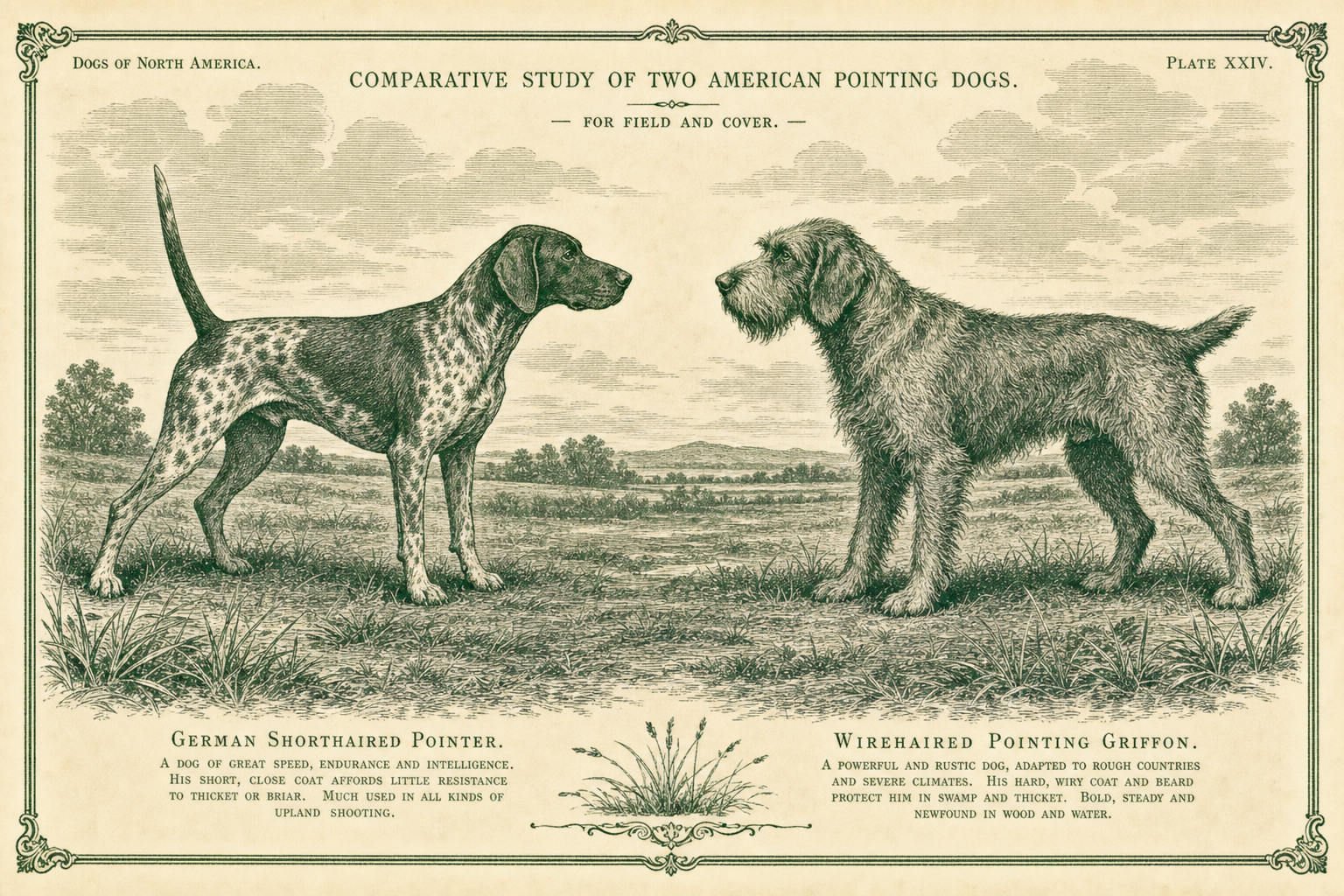
GSP and WPG: two Continental versatile breeds, two different personalities on the ground.
Both breeds point, retrieve, and track. Both are Sporting Group dogs built for the walking hunter who wants one dog for upland and waterfowl. But put them in the field side by side and the differences show up fast: pace, range, and what you’re signing up for when you drive home with that puppy.
Hunting Style: Speed and Ground
The GSP covers more country. That’s the short version. Where a WPG settles into a medium‑range, smooth gallop that keeps it close to the walking hunter, the GSP tends to push wider and move faster. According to the breed’s history, GSPs were built for versatility at speed — the pointing instinct is reliable, the head and tail style tends to be flashy, and the retrieve is strong on land and water. They are genuinely capable in the duck blind: they’ll jump in, fetch, and do it again all morning.
The WPG hunts at a sustained gallop that most walking hunters find easier to manage. Its unique “feline” movement on point — the belly‑to‑ground crouch called the Korthals Cat — is unlike anything you’ll see from a GSP. It’s not a range issue, it’s a style difference. The WPG was built from the ground up for the hunter on foot, in heavy cover, who needs a dog that works with them rather than ahead of them.
Both breeds blood‑trail wounded birds. Both retrieve from water. If you’re hunting big, open country — Texas quail flats, Saskatchewan sharptails — the GSP’s wider range is an asset. For grouse woods, wetland margins, and pheasant fields where the cover is thick and the shots come close, the WPG’s medium‑range style is a better fit.
Interactive Tool
Which test or trial should your dog do next?
Answer a few quick questions about your dog’s age, training and your goals. We’ll point you to the right next step — NAVHDA, an AKC hunt test or field trial, a UKC or NSTRA title, or the conformation ring.
Temperament and Trainability
The GSP is a high‑energy dog. That’s not a criticism — it’s the engine that makes them so good in the field. But it’s the honest tradeoff. Expect 1–2 hours of vigorous daily exercise; under-exercised GSPs become destructive and can develop neurotic behaviors. They’re biddable and smart, but their drive can make them distractible mid-session, and they require consistent structure from a handler who follows through.
The WPG is a medium‑high energy dog with a softer temperament. It responds best to patience over force — handlers who try to push a WPG hard often create roadblocks. NAVHDA is the recommended framework for both breeds, but the WPG’s reputation as one of the most amateur‑friendly versatile breeds is well-earned. If you’re a first‑time versatile dog owner, that matters.
Coat, Grooming, and Health
The GSP’s short, dense coat is one of its best features for owners who want minimal maintenance. Weekly brushing, no stripping, done. It sheds seasonally more than a WPG, but nothing dramatic. The tradeoff is cold‑weather performance: no insulating undercoat means cold water and late‑season conditions are harder on a GSP than on a wire‑coated dog.
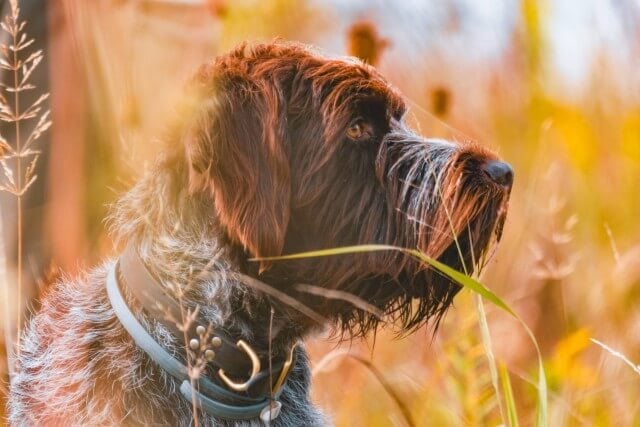
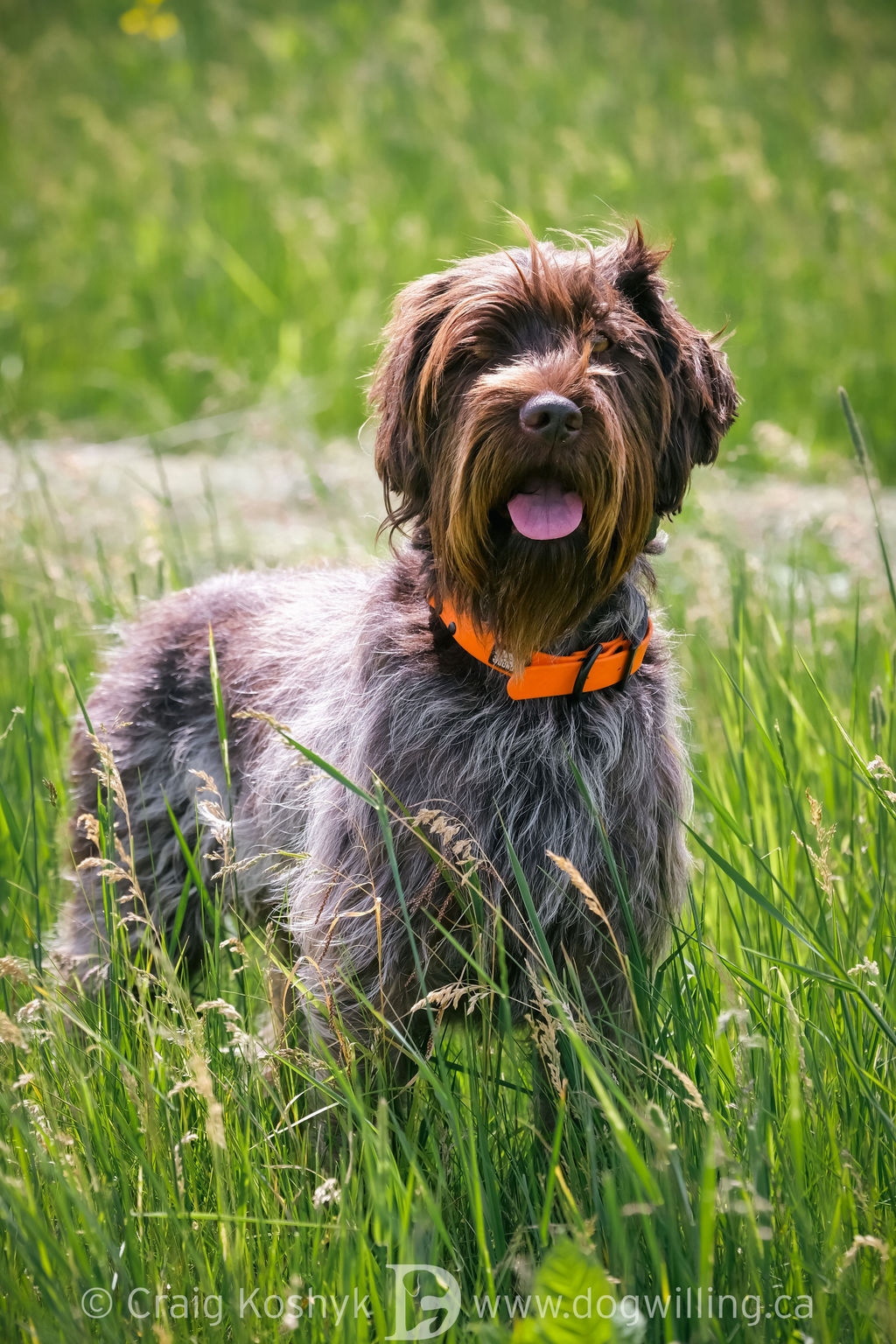
The WPG’s harsh double coat sheds minimally, but it requires hand‑stripping once or twice a year to maintain texture and function. Clipping softens the coat permanently, which defeats the purpose. The beard traps debris and needs regular attention. It’s not high maintenance by most standards, but it’s more involved than a GSP.
On health: GSPs carry real risks worth knowing. Bloat (GDV) is a significant concern in deep‑chested individuals. Progressive retinal atrophy, Von Willebrand’s disease, exfoliative cutaneous lupus (a breed‑specific autoimmune condition), and CCL tears are documented in the breed. Recommended health tests include OFA hips, OFA elbows, cardiac, eyes (CAER), and a vWD DNA test. WPGs carry hip and elbow dysplasia risks, PRA, hypothyroidism, and ear infections; the AWPGA requires OFA hips, elbows, thyroid, and annual eye exams from breeding dogs.
Home Life and Space
Both breeds are affectionate family dogs that do well with children and other dogs. Neither is apartment‑viable. The GSP forms strong bonds and will follow you around — expect a dog that wants to be part of everything. Under-exercised GSPs can develop separation anxiety and will make that known through destruction.
The WPG is affectionate and moderate‑velcro: close bond with the family, but not as prone to the anxious edge that can show up in high‑drive dogs left without outlets. Both dogs need rural or semi‑rural settings, or at minimum an active suburban household with daily field time.
Which Dog Fits You?
Choose the GSP if you want the most proven, widely-supported versatile breed in North America, and you have the daily exercise commitment to match its drive. The GSP community is enormous — trainers, hunt tests, breeding lines — and the dog’s short coat and athletic build are genuinely appealing. If you hunt big country and want a dog that covers ground aggressively, the GSP earns it.
Choose the WPG if you want a close‑working, amateur‑friendly versatile dog with a lower‑shedding coat, a softer disposition, and the distinctive Korthals Cat point style. It’s not a slower or lesser dog — it’s a different tool built for a different hunting philosophy. The WPG is the second most registered breed in NAVHDA for a reason.
Either way, source matters more than breed. A well-bred GSP from hunting lines will run circles around a poorly-bred anything. Take your time, visit breeders, and watch the dogs work before you decide. See the rest of our gundog comparison series for more breed‑by‑breed breakdowns, or read more about what makes the WPG unique.
How this article was made: researched and written with AI, then reviewed, edited, and published by Griffons Out West in Belgrade, Montana.