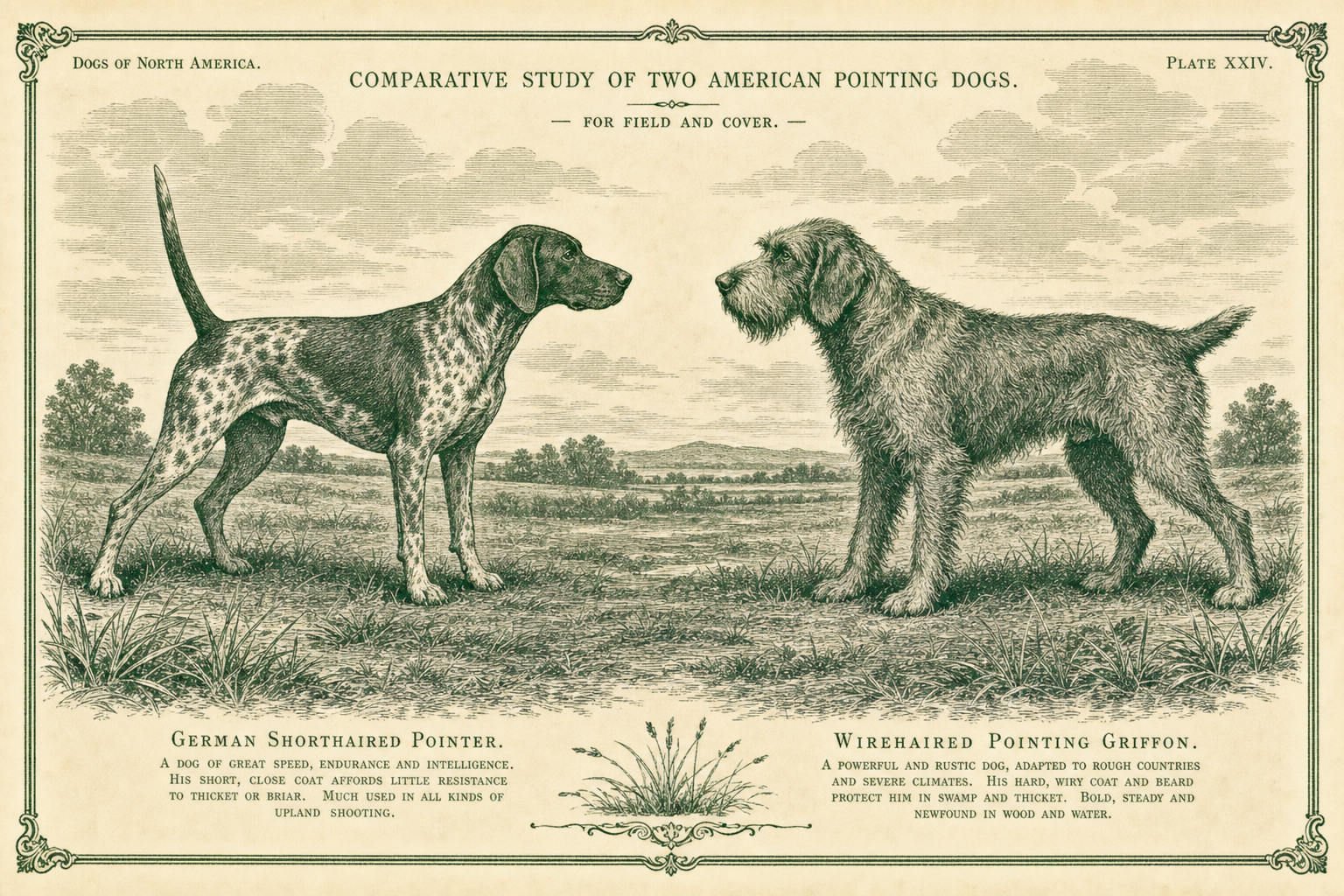
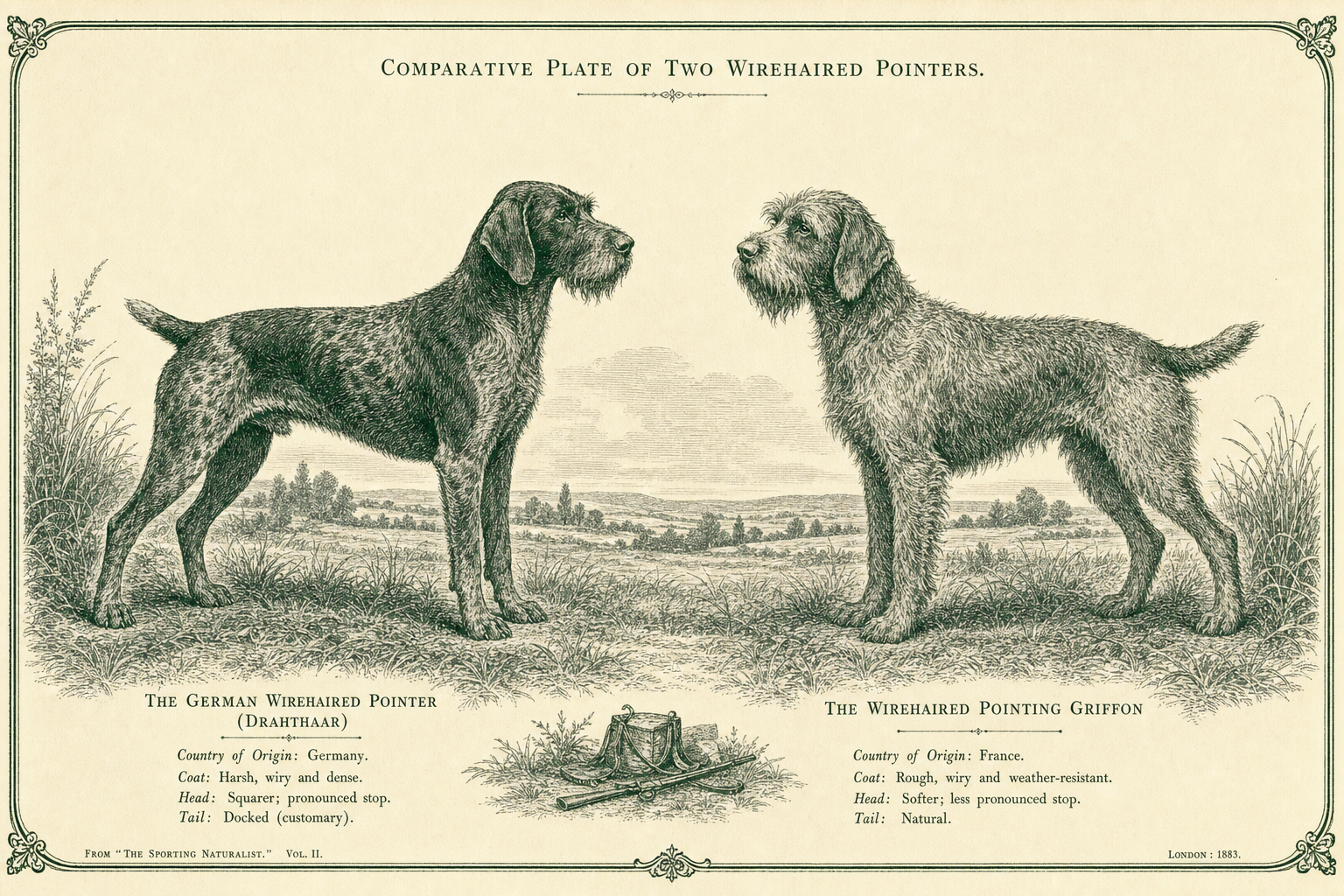
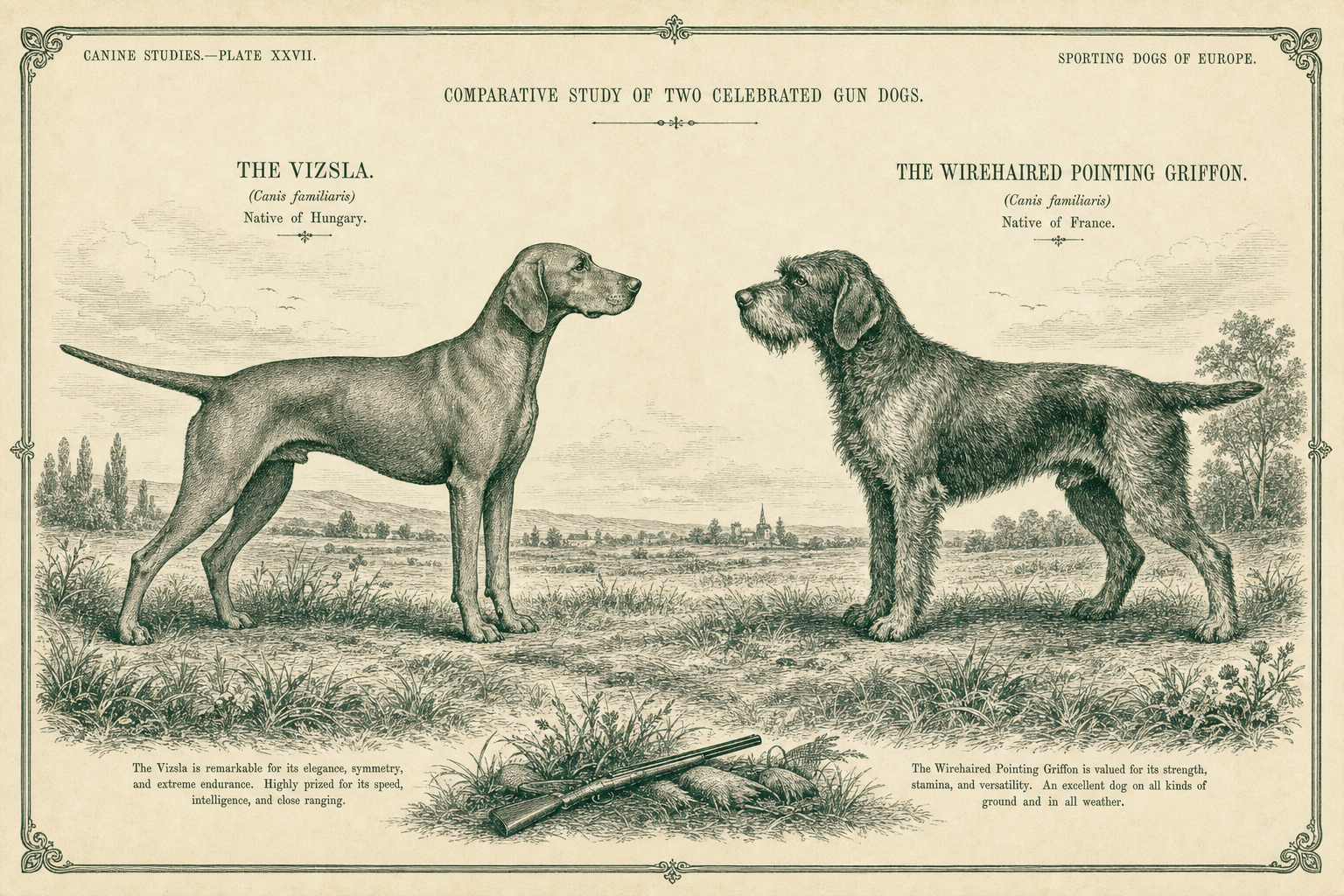
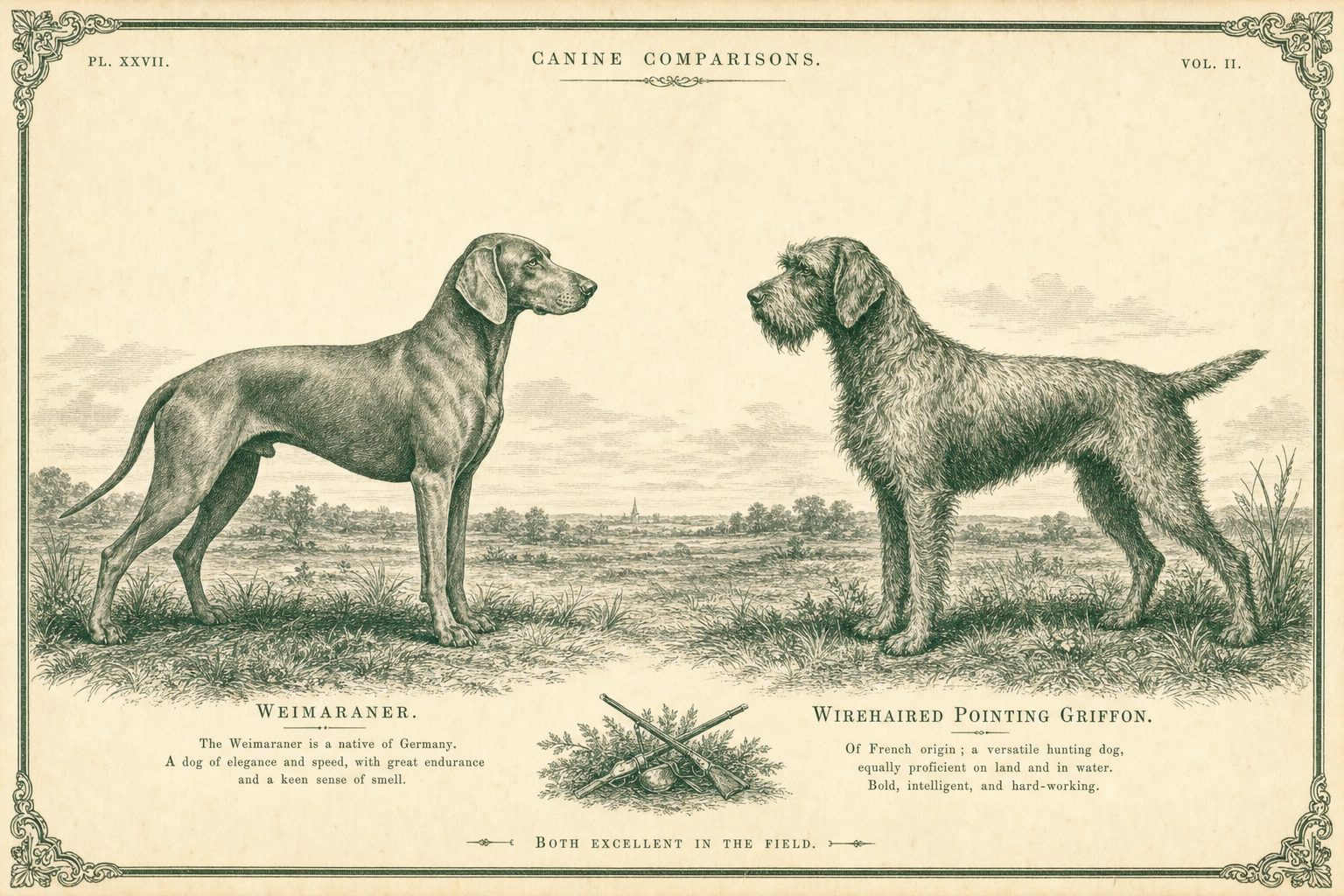
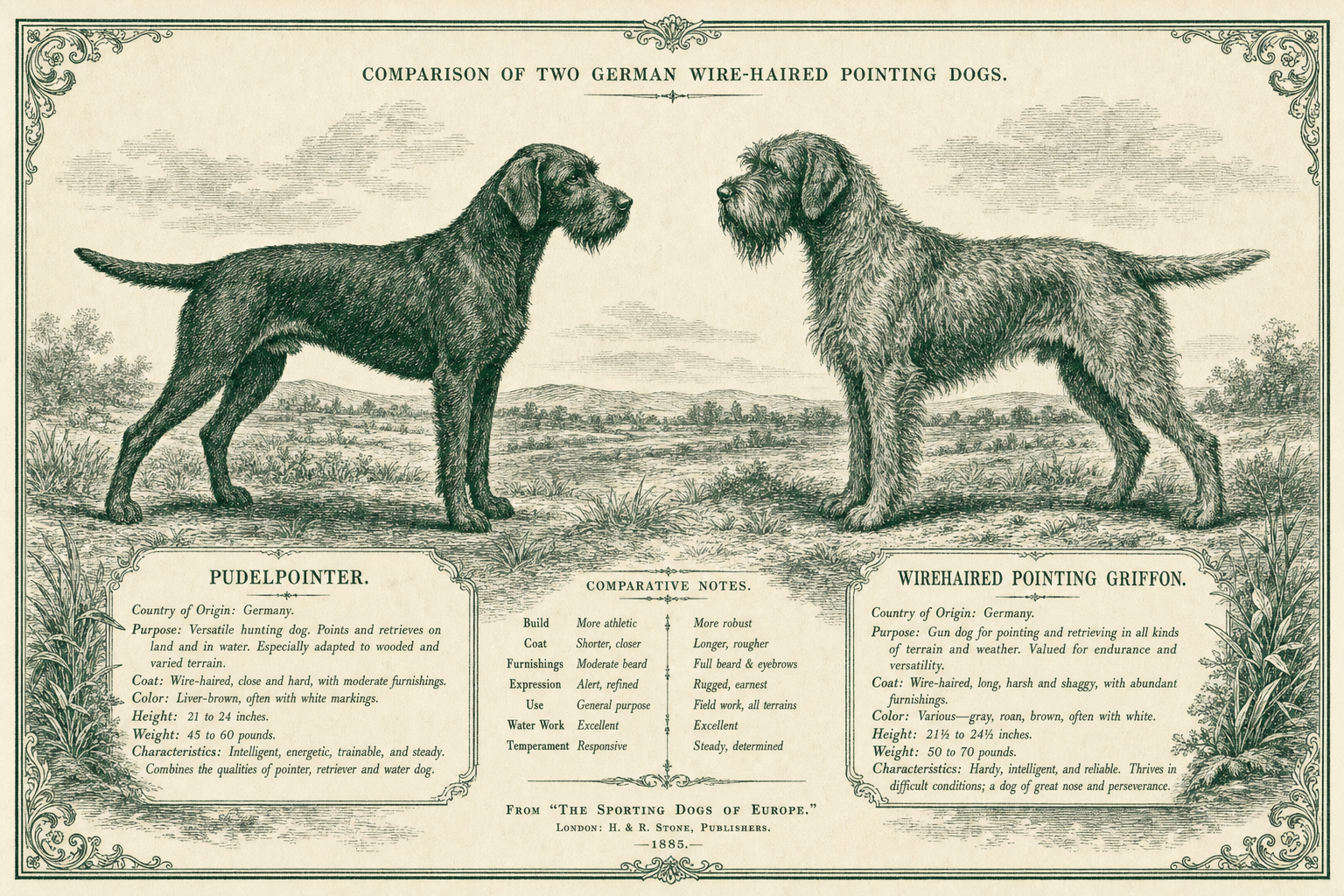
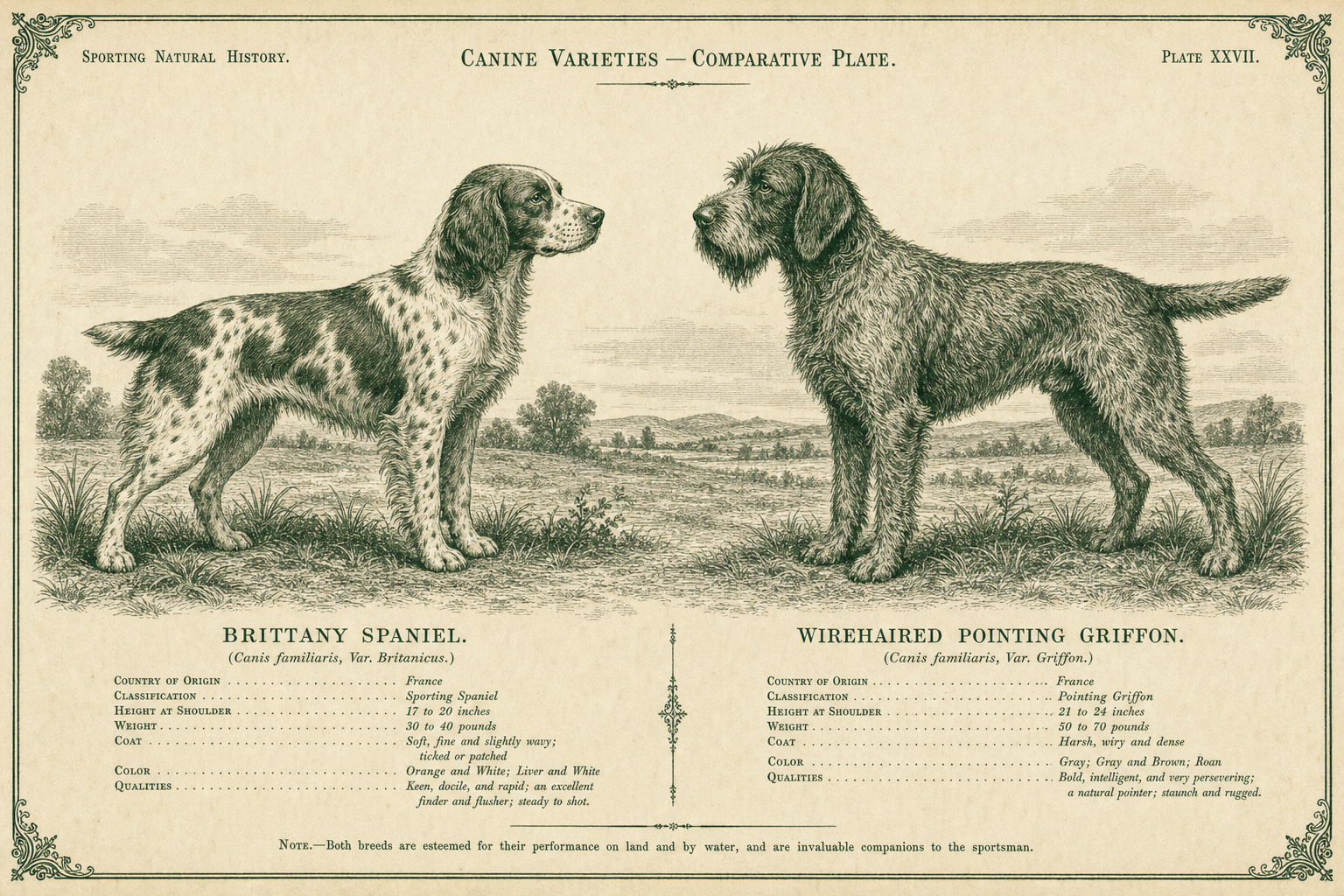
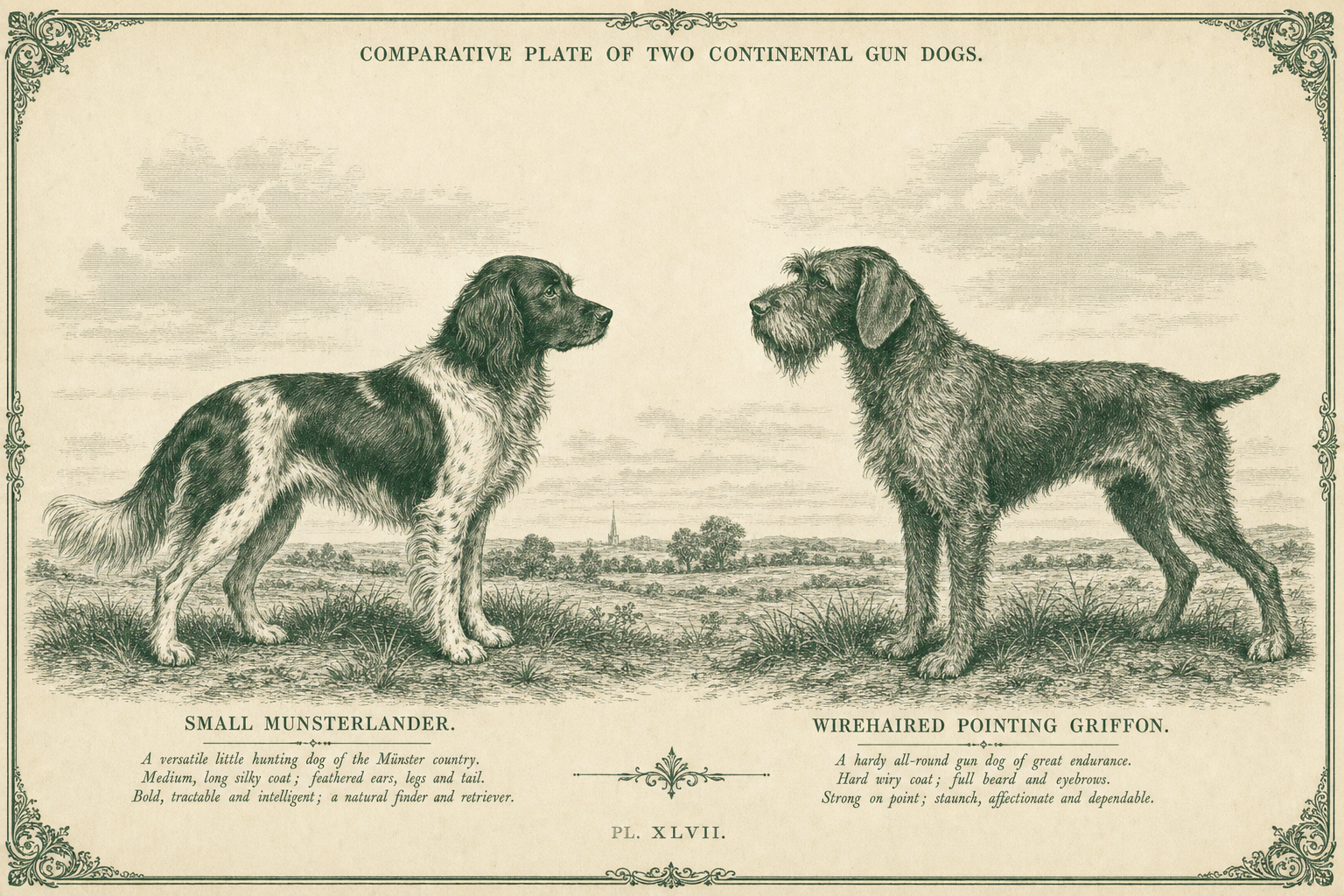
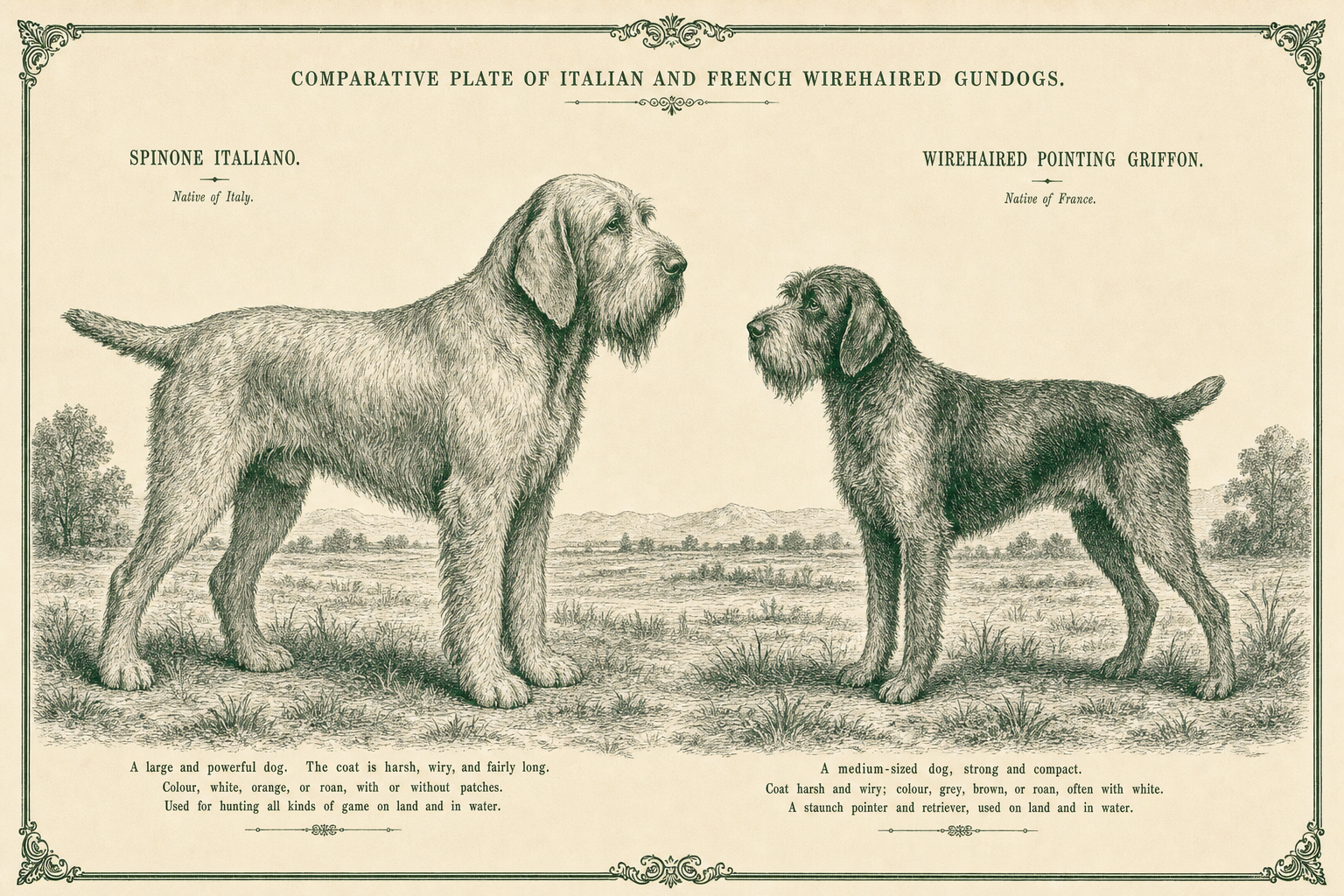
Most people do not arrive at the Wirehaired Pointing Griffon first. They arrive with a history — a Lab that lived for the duck blind, a friend’s Shorthair that ran like the wind, a childhood Golden that slept at the foot of the bed — and somewhere along the way they heard about this bearded, wiry dog that points like a cat and asked the only question that matters: would it actually fit my life better than what I already know?
That is the question this series exists to answer honestly. Not to sell you a Griffon — if a Labrador is the right dog for your season and your home, you should buy a Labrador and never look back. Every breed below earned its place in the field through generations of careful work, and each one is genuinely the best dog in the world for the right person. The goal here is simpler and more useful: to put the WPG side by side with the breeds you already know, fairly, so you can see where it lines up and where it does not.
Different dogs for different days afield. This series compares the Griffon to the breeds you already know — in hunting style, temperament, and life at home.
What We Actually Compare
Choosing a gundog is rarely about which breed is “best.” It is about fit. So every post in this series walks the same honest checklist, breed by breed:
Hunting style — pointing, flushing, or retrieving; how big the dog runs; upland versus waterfowl; how it handles cold water and a tracking job.
Temperament — energy level, biddability, how soft or hard the dog is, and how forgiving it is of an amateur handler.
Husbandry — coat and grooming, shedding, drool, and the health screening the breed needs.
Home life — affection, fit with kids and other dogs, barking, and how well the dog tolerates being left alone.
Space and exercise — yard and acreage, and the honest daily minimum to keep the dog sane.
Interactive Tool
Which test or trial should your dog do next?
Answer a few quick questions about your dog’s age, training and your goals. We’ll point you to the right next step — NAVHDA, an AKC hunt test or field trial, a UKC or NSTRA title, or the conformation ring.
Where the Griffon Sits
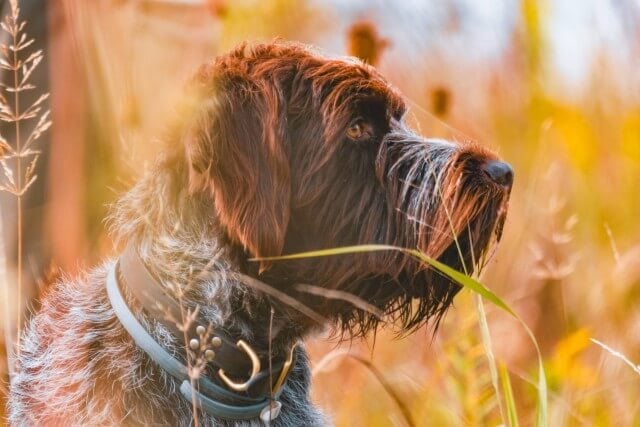
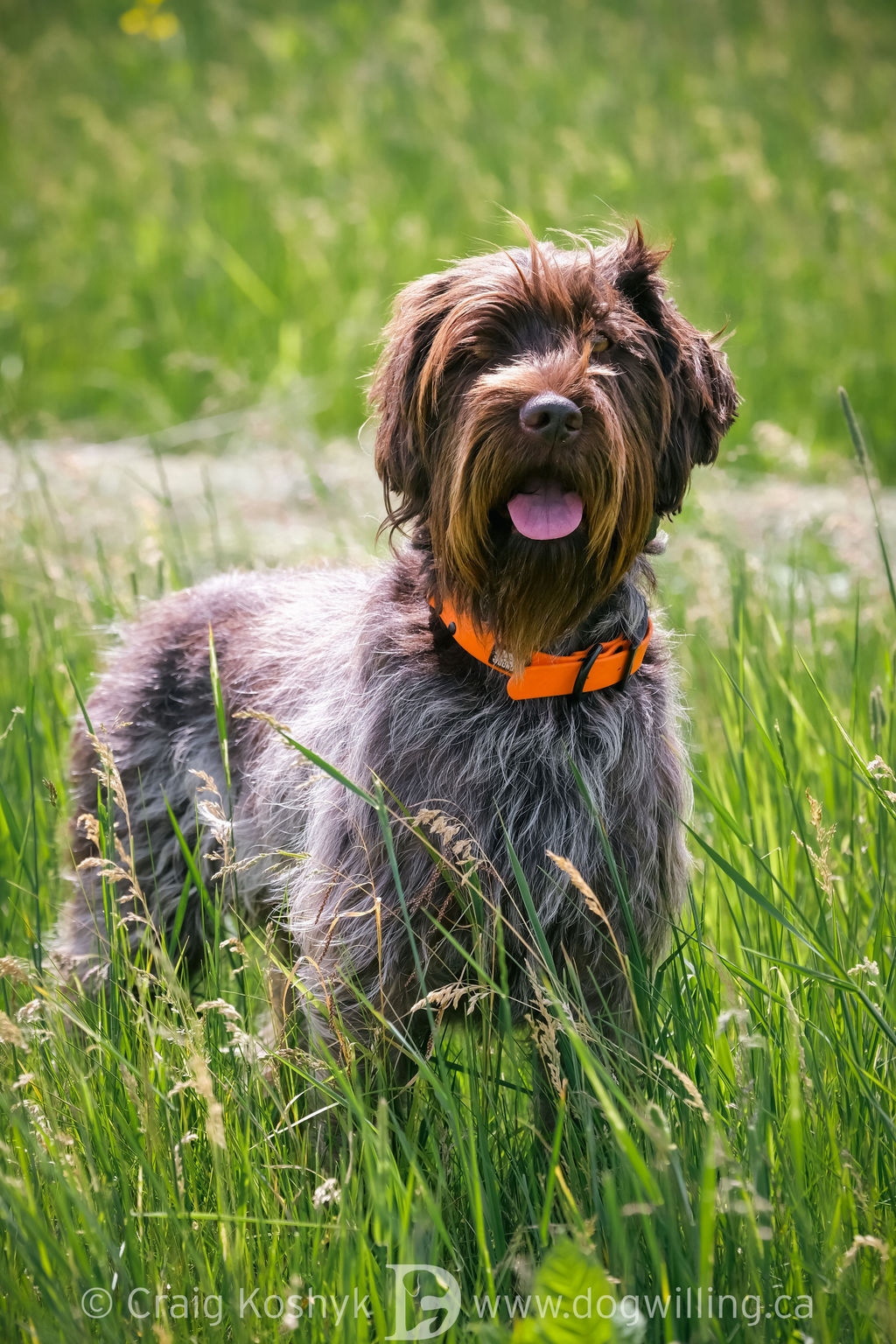
It helps to have a baseline before you start comparing. In plain terms, the Wirehaired Pointing Griffon is a medium‑range, close‑working versatile pointing breed built for the hunter who walks. It points, retrieves on land and water, and tracks; its harsh double coat sheds little but needs hand‑stripping; it is affectionate and notably amateur‑friendly, with a soft, sensitive streak that rewards patience and punishes heavy hands. It is medium‑high energy — not a couch dog, but calmer than a Shorthair or a Vizsla. If you want the full picture of the breed itself, start with about the breed and our guide to its history, registries, and clubs.
With that baseline in hand, here is the rest of the field.
The Versatile Pointing Breeds
These are the Griffon’s closest peers — Continental breeds bred to point, retrieve, and track in one package. If you are weighing a WPG, you are most likely weighing it against one of these.
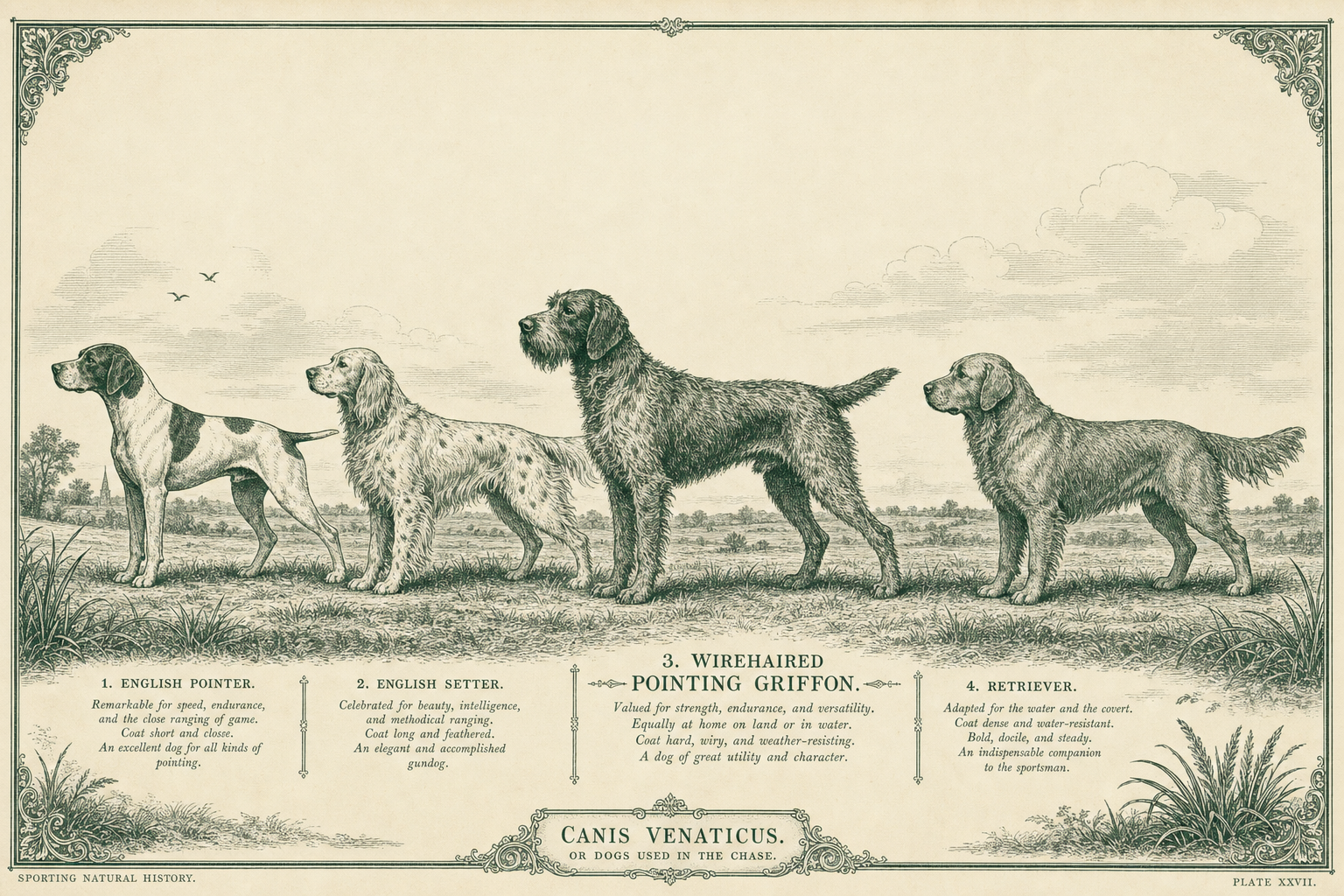
Before the Continental breeds came the great pointing and setting specialists of the British and American field — bred for style, range, and the wide‑open grouse and quail country where a dog runs big.
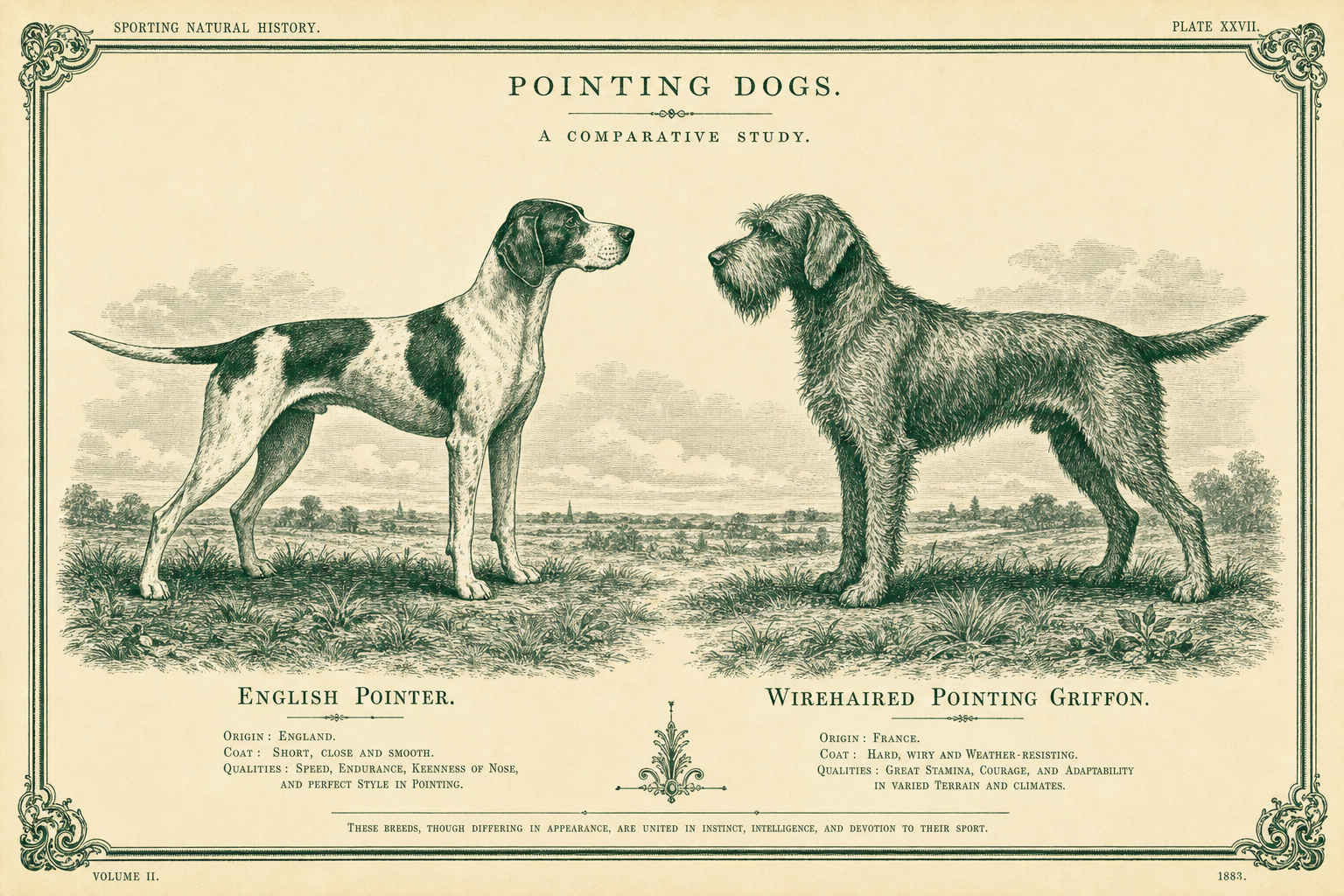
WPG vs. the Pointer — the original wide‑running, all‑business bird‑finding machine.
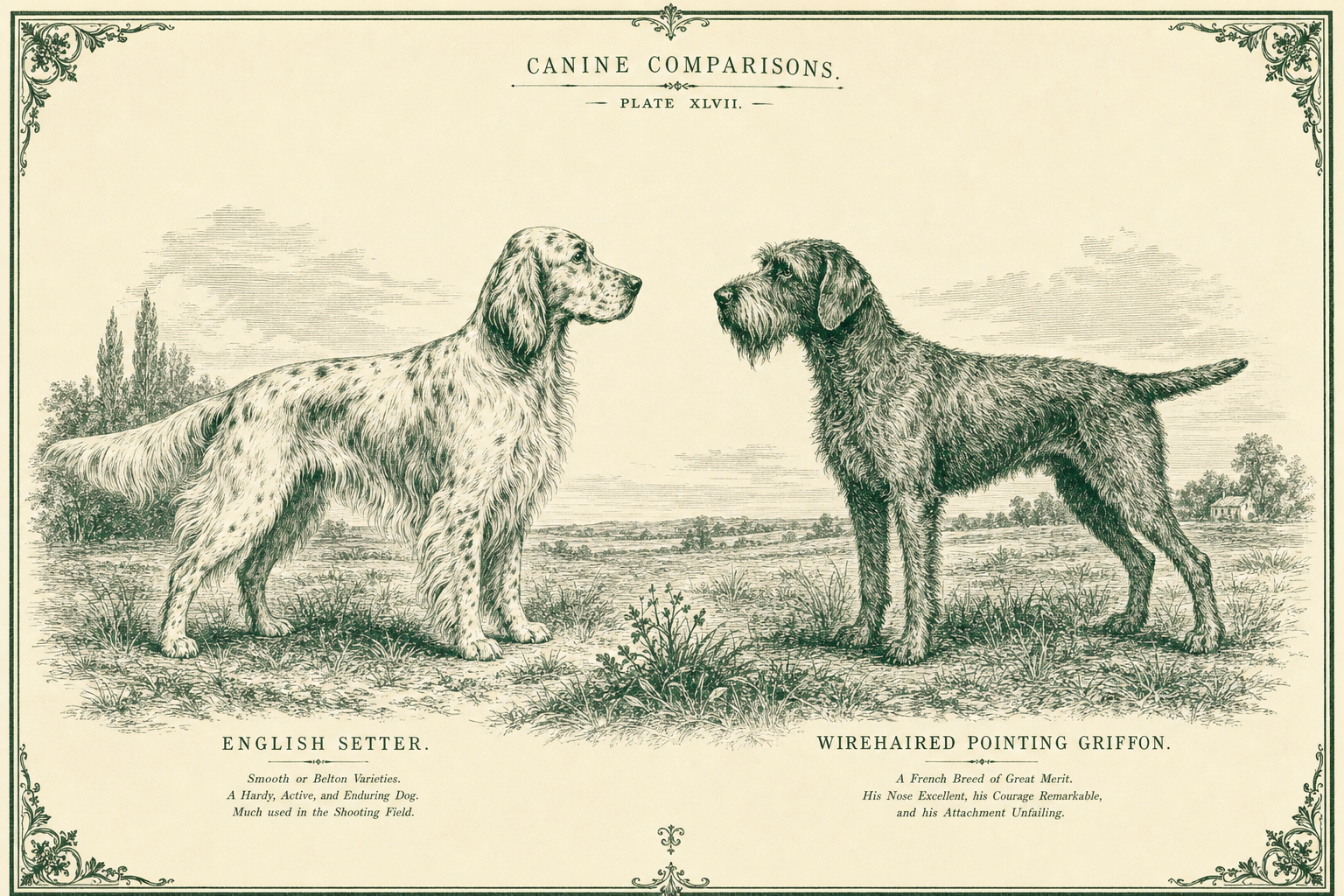
WPG vs. the Setters — the English, Irish, and Gordon Setters, and what feathered elegance asks of an owner.
The Retrievers & Flushers
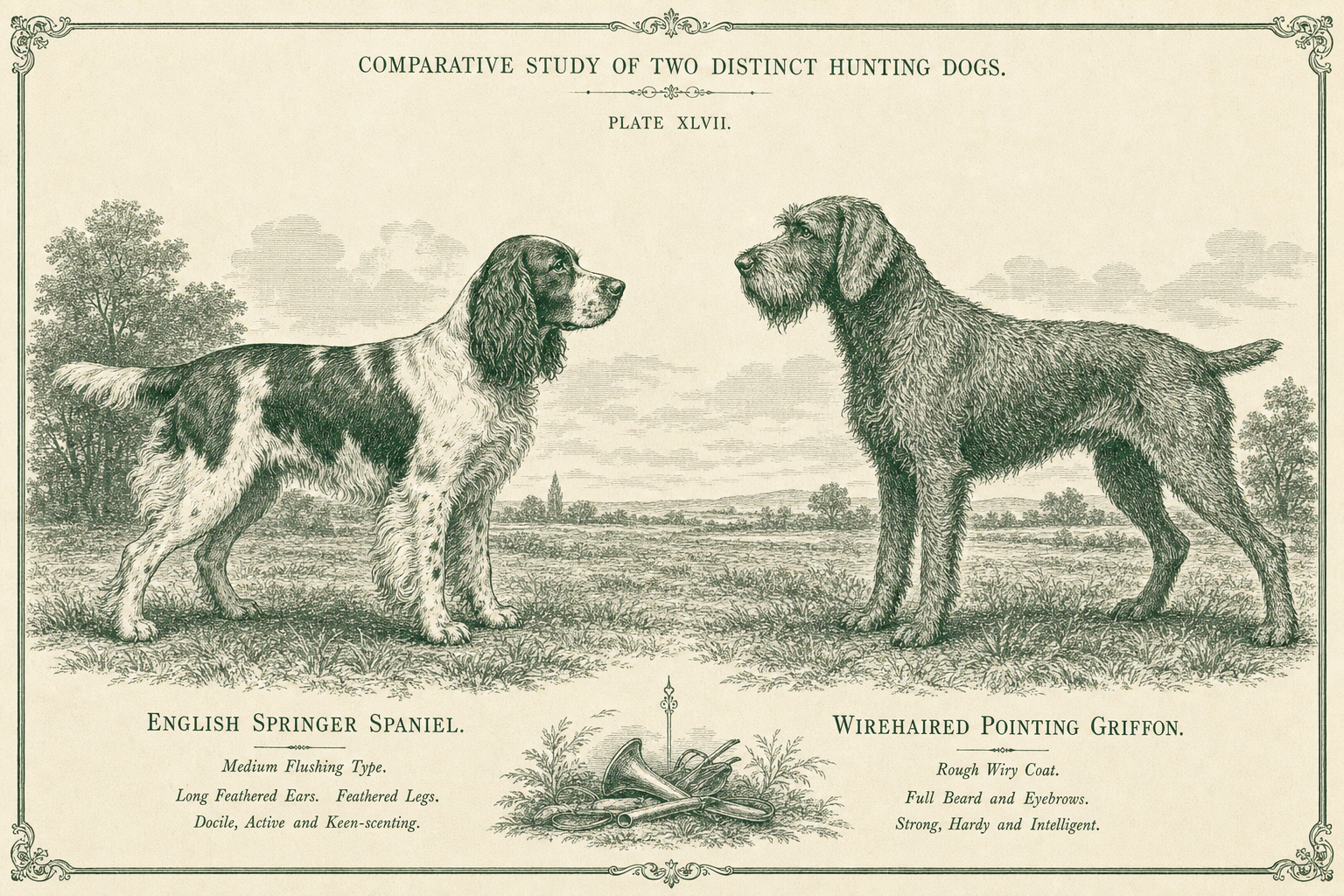
Most American hunters meet bird dogs through a retriever or a flushing spaniel first. These are not versatile pointing breeds — they hunt a different way — and that difference is exactly the point of comparison.
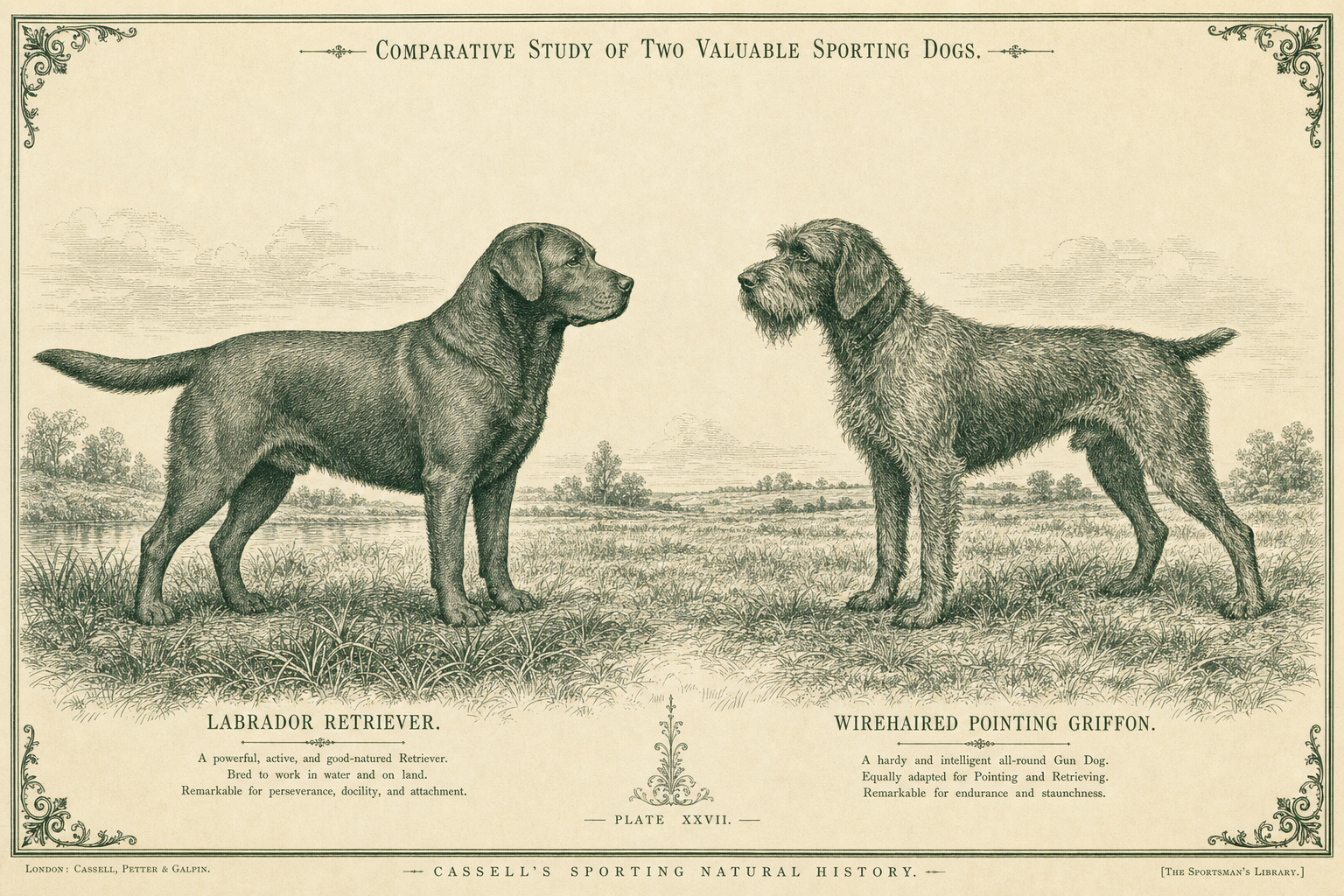
WPG vs. the Retrievers — the Labrador, Golden, and Chesapeake Bay Retriever, and why a retriever is not a pointer.
One last word before you dive in. We breed Griffons, and we love them — but a comparison series written to make every other breed look like a mistake would be worthless to you and a little dishonest besides. So you will find real praise for every dog here, and real tradeoffs listed for the Griffon too. The right dog is the one that fits the hunter, the home, the yard, and the years ahead. If that turns out to be a Griffon, we would be glad to talk. If it turns out to be something else, we will have done our job either way.
How this article was made: researched and written with AI, then reviewed, edited, and published by Griffons Out West in Belgrade, Montana.
Breed characteristics throughout this series are drawn from breed parent clubs, the American Kennel Club, Project Upland breed profiles, NAVHDA, and veterinary sources, with individual citations in each post. Every breed varies by line and by breeder — meet the dogs and the people behind them before you decide.
Breed Comparisons
Every Head-to-Head Comparison
See exactly how the Wirehaired Pointing Griffon measures up against each breed it is most often weighed against.