Before there were continental versatile breeds and before “NAVHDA-tested” was a thing anyone said, there were setters. The English, Irish, and Gordon Setters are some of the oldest and most iconic bird dogs in the world — developed in Britain and Ireland for grouse, woodcock, quail, and pheasant long before most of the Continental breeds had been codified. They hunt with style, cover ground with elegance, and carry a coat that’s immediately recognizable from 200 yards away.
The Wirehaired Pointing Griffon is a continental versatile breed built for a different kind of hunting partnership — closer to the gun, more multi‑purpose, and designed for the walking hunter who wants one dog that points, retrieves, tracks, and handles water. The setters offer something the WPG was never bred to be: sweeping, stylish, big‑running bird‑finding on a grand scale. Understanding what each tradition offers — and what it costs — is the real work of this comparison.
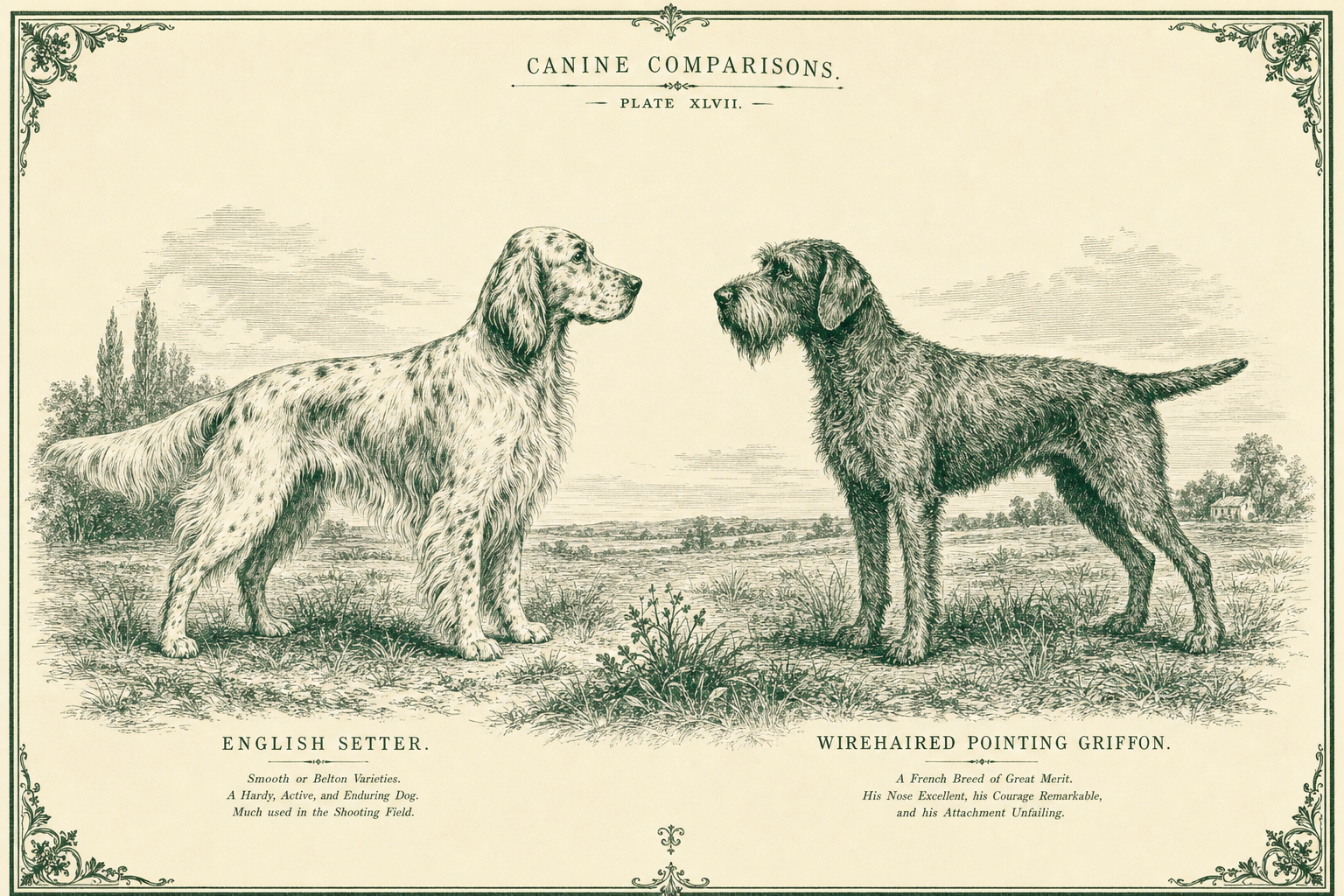
Wirehaired Pointing Griffon vs. the Setters — continental versatility meets British feathered elegance.
The Field vs. Show Split: Know This First
Before comparing any setter to a WPG, the most important fact is this: in all three setter breeds, the gap between field‑bred and show‑bred dogs is enormous. A bench‑bred English or Irish Setter may look spectacular but will not hunt. You must specifically seek field‑bred or dual‑purpose lines. This is more critical for the Irish Setter than for the English or Gordon, but it applies to all three. It is the single biggest variable in setter ownership — bigger than individual temperament differences between the breeds. For a broader look at how all these breeds compare, visit our gundog comparison series.
The WPG Baseline
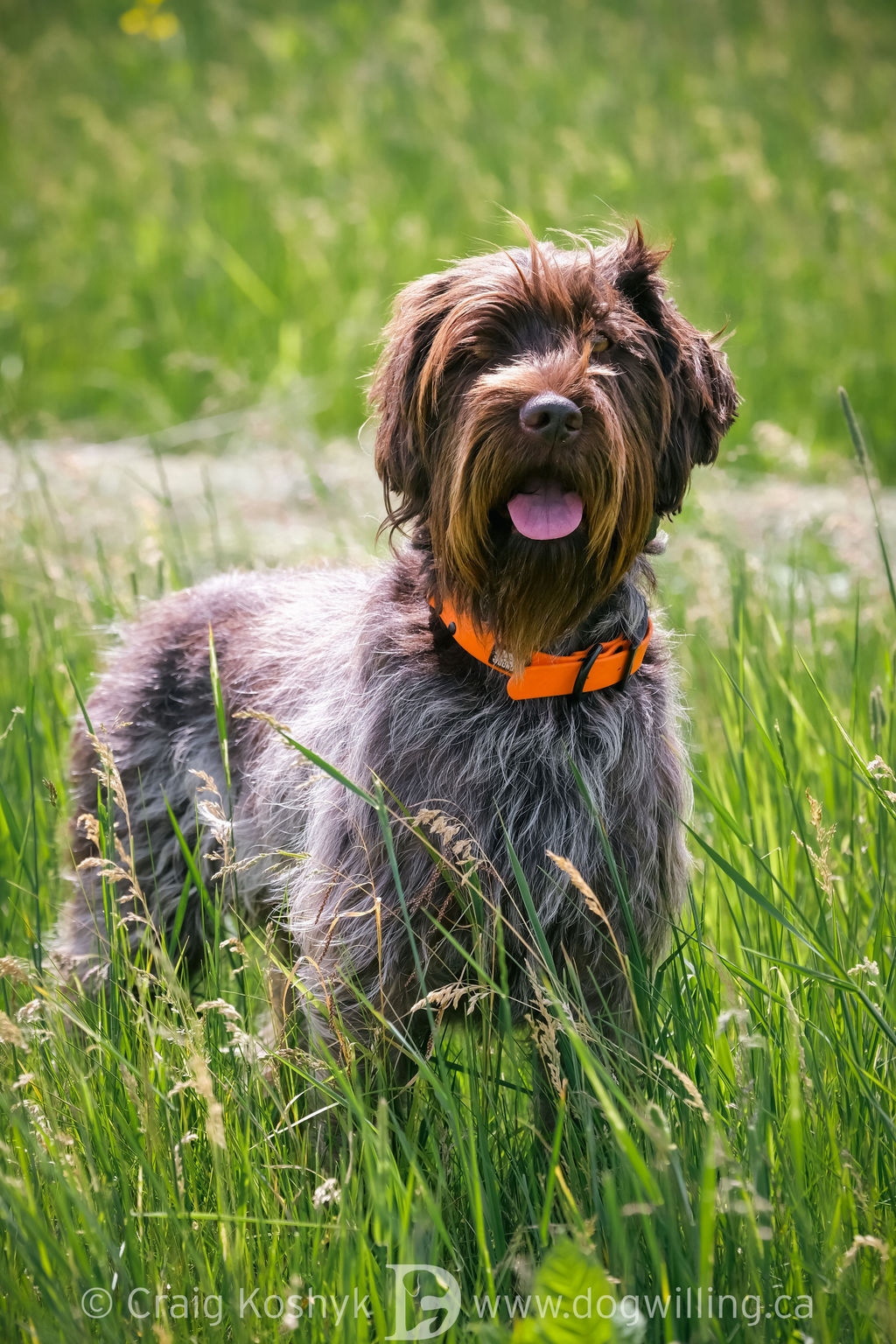
The WPG is a close‑to‑medium‑range continental dog. It points with a unique feline, belly‑to‑ground crouch; retrieves reliably from land and water; tracks wounded birds and game; and suits the walking hunter in varied terrain — field, brush, forest, wetland. It’s soft‑tempered and highly accessible for first‑time versatile dog owners. The wire coat sheds minimally but needs hand‑stripping to maintain texture. Health testing requirements are detailed at the AWPGA health page.
English Setter
The English Setter is one of the most popular bird dogs in the world — approximately 30,000 are whelped annually worldwide, according to the Project Upland English Setter profile. There’s a reason for that. These dogs are genuine field athletes in field‑bred lines, and the Ryman and Old Hemlock “cover dog” strains are the Northeast grouse and woodcock hunter’s quiet pride. They work closer than Llewellin field‑trial dogs — a meaningful distinction.
Field‑bred English Setters are big‑running to wide‑running dogs. The Llewellin strain in particular covers enormous ground at a fast, flowing gallop — thrilling to watch, challenging to manage on foot in small cover. The cover dog lines (Ryman, Old Hemlock) work tighter and more deliberately, better suited to grouse woods and mixed terrain. Both point with a classic setter posture: crouching or “setting” originally; modern American field dogs more upright. Some develop the point at 8 weeks; others take 11–12 months.
Temperament is the English Setter’s great asset at home: “absolute sweethearts,” soft, social, and loving with family. They’re calm in the house once exercised — full of energy in the field, manageable at home. Soft temperament means they cannot tolerate force training. Males run 25.5–27 inches and 55–80 lb; females 24–25.5 inches and 45–70 lb. Lifespan is 10–12 years. Grooming is moderate to high — the belton coat (white ground with blue, orange, or tricolor flecking) is beautiful but requires regular brushing. Health concerns include hip and elbow dysplasia, deafness (BAER test important), hypothyroidism, and PRA.
Interactive Tool
Which test or trial should your dog do next?
Answer a few quick questions about your dog’s age, training and your goals. We’ll point you to the right next step — NAVHDA, an AKC hunt test or field trial, a UKC or NSTRA title, or the conformation ring.
Irish Setter
The Irish Setter is the most visually dramatic bird dog alive. That mahogany coat moving through golden autumn grass is genuinely breathtaking. The breed is sweet, fun‑loving, and social with everyone — “happy to make new friends” is about as accurate a descriptor as you’ll find. At its best, a field‑bred Irish Setter is an enthusiastic, flowing bird dog with strong retrieving desire and a personality that makes camp life a pleasure.
The modern Irish Setter’s challenge is the show‑ring legacy. The gap between field‑bred and show‑bred Irish Setters may be the breed’s defining practical problem. The PetMD Irish Setter profile notes that field‑bred dogs are specifically what hunters need. Seek Irish Setter Club of America‑affiliated field lines. The independent streak requires patient, positive, fun training — not rigid repetition. The coat is high‑maintenance: daily or 2–3x weekly brushing to prevent mats; monthly trimming; every burr in the county will find its way into the feathering.
Size: approximately 60–70 lb, 25–27 inches; lifespan ~14 years, one of the longer-lived large sporting breeds. Energy is very high — the breed stays puppy‑size boisterous until age 3–4, demanding consistent engagement throughout. Health concerns include bloat/GDV, hip dysplasia, PRA, hypothyroidism, and epilepsy.
Gordon Setter
The Gordon is the grouse and woodcock hunter’s quiet answer to “which setter?” Built in the craggy terrain of Scotland, the Gordon is heavier, more methodical, and closer‑working than its setter relatives. The Gordon Setter Club of America standard puts it directly: the Gordon “suggests strength and stamina rather than extreme speed.” This is a dog that covers heavy cover carefully, not a horse‑hunt spectacle on the horizon.
Of the three setters, the Gordon is the closest in hunting style to the WPG — medium range, thorough, suited to foot hunting in thick cover. It bonds deeply with its family, with a dignified loyalty rather than the Irish Setter’s effusive friendliness. Strangers may get a reserved welcome. Handlers need calm confidence — meek or inconsistent owners will struggle. The black‑and‑tan coat is dense and weather‑resistant, handling Scottish Highland conditions better than either of the other setters.
PRA (progressive retinal atrophy) is the Gordon’s most significant breed‑specific health concern — eye health screening is essential, and buyers must verify OFA/CAER eye clearances and a PRA DNA test for both parents. Males run 24–27 inches and 55–80 lb — the heaviest setter. Lifespan is 10–12 years. Other concerns include hip dysplasia, hypothyroidism, and bloat. The breed is less common in North America, which means waitlists and limited geographic access to quality breeders.
The Setters vs. the WPG: What Actually Differs
All three setters carry a long, feathered coat that requires meaningful grooming — moderate for the Gordon, high for the Irish. The WPG’s wire coat requires annual hand‑stripping but sheds minimally and is lower‑maintenance day‑to‑day. Setter coats in the field collect burrs, seeds, and moisture in ways the WPG’s coarser wire coat does not.
Retrieving: English and Gordon Setters can be developed as solid retrievers when selected for it; Irish Setters in field lines often retrieve willingly. But retrieving was not the setter’s design priority. The WPG was built around a strong natural retrieve as a core function, not an add‑on.
Range: the English and Irish Setters in field‑trial lines cover substantially more ground than a typical WPG. The Gordon is the exception — it’s the closest setter in range to the WPG. All four breeds require a yard and daily vigorous exercise; none is apartment‑viable.
Versatility: the WPG tracks, retrieves from water, and handles the duck blind. The setters are primarily upland birds specialists — skilled ones, but the “versatile” mission (point, retrieve, track, water) belongs more fully to the continental breeds.
Which Dog Fits You?
Choose a setter if you love the feathered elegance of the British bird dog tradition, you primarily hunt upland birds in open to moderate cover, and you want a sweeping, stylistic hunting companion. The English Setter (cover dog lines) is the grouse hunter’s choice; the Gordon is the heavy‑cover foot hunter’s setter; the Irish Setter is the most beautiful sporting dog alive when bred right — just do your homework on field lines. All three reward patient, positive handling.
Choose the WPG if you want a continental versatile dog that stays closer to the gun, retrieves reliably without training battle, works water, tracks wounded game, and does everything out of a single wire‑coated package. The WPG’s accessibility for first‑time owners and its do‑everything credential make it the right choice for the hunter who needs one dog for everything they do.
How this article was made: researched and written with AI, then reviewed, edited, and published by Griffons Out West in Belgrade, Montana.