The Vizsla is hard to ignore. That golden‑rust coat, lean build, and the way a well‑bred one moves through a field — it’s a striking dog. But the Vizsla isn’t just a pretty face in the hunting world. It’s been a working versatile breed since Hungarian aristocracy used them centuries before “versatile gundog” became a marketing term. If you’re considering a Vizsla and wondering how it compares to a Wirehaired Pointing Griffon, these are two genuinely different personalities in similar-sized, similarly-capable bodies.
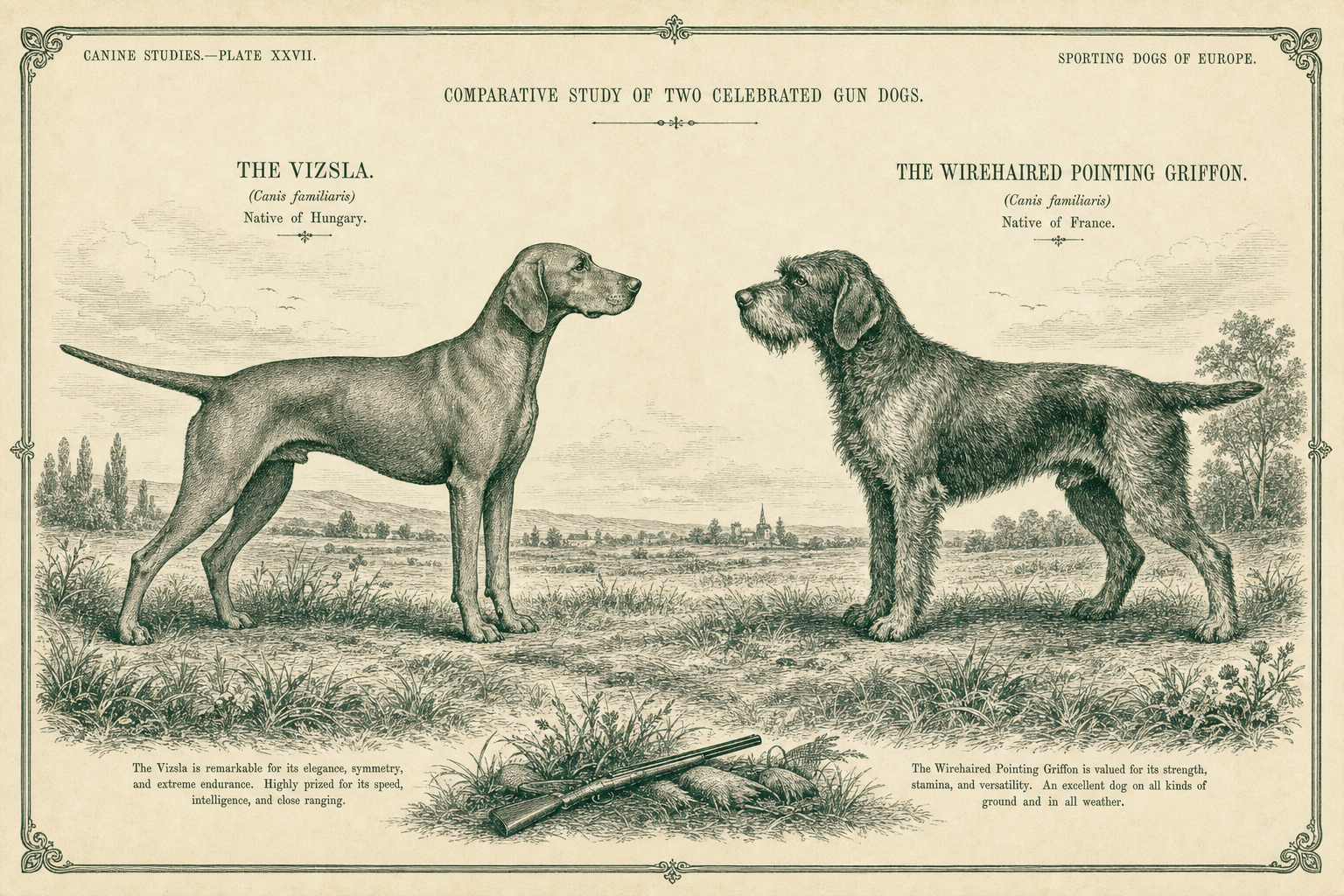
The velvet‑coated Vizsla and the wire‑coated WPG: both versatile continental pointers, different in key ways.
Both breeds are continental versatile pointing dogs: they point, retrieve, and track. Both are medium‑sized, family‑oriented, and well‑suited to the walking hunter who wants one dog for multiple jobs. The differences show up in coat, cold‑weather capability, and especially in how closely each dog bonds to its person.
Hunting Style: Similar Ground, Different Coat
The Vizsla hunts at a medium to close‑medium range — adjustable, not as wide‑running as a GSP by default. It points reliably, retrieves naturally, and is capable on both pheasant and waterfowl. Its field‑trial lines can run wider, but a well‑bred hunting Vizsla tends to stay in front of the walking gun, which most hunters appreciate.
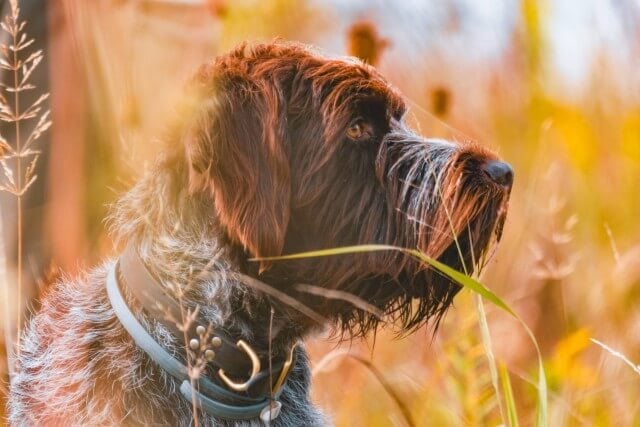
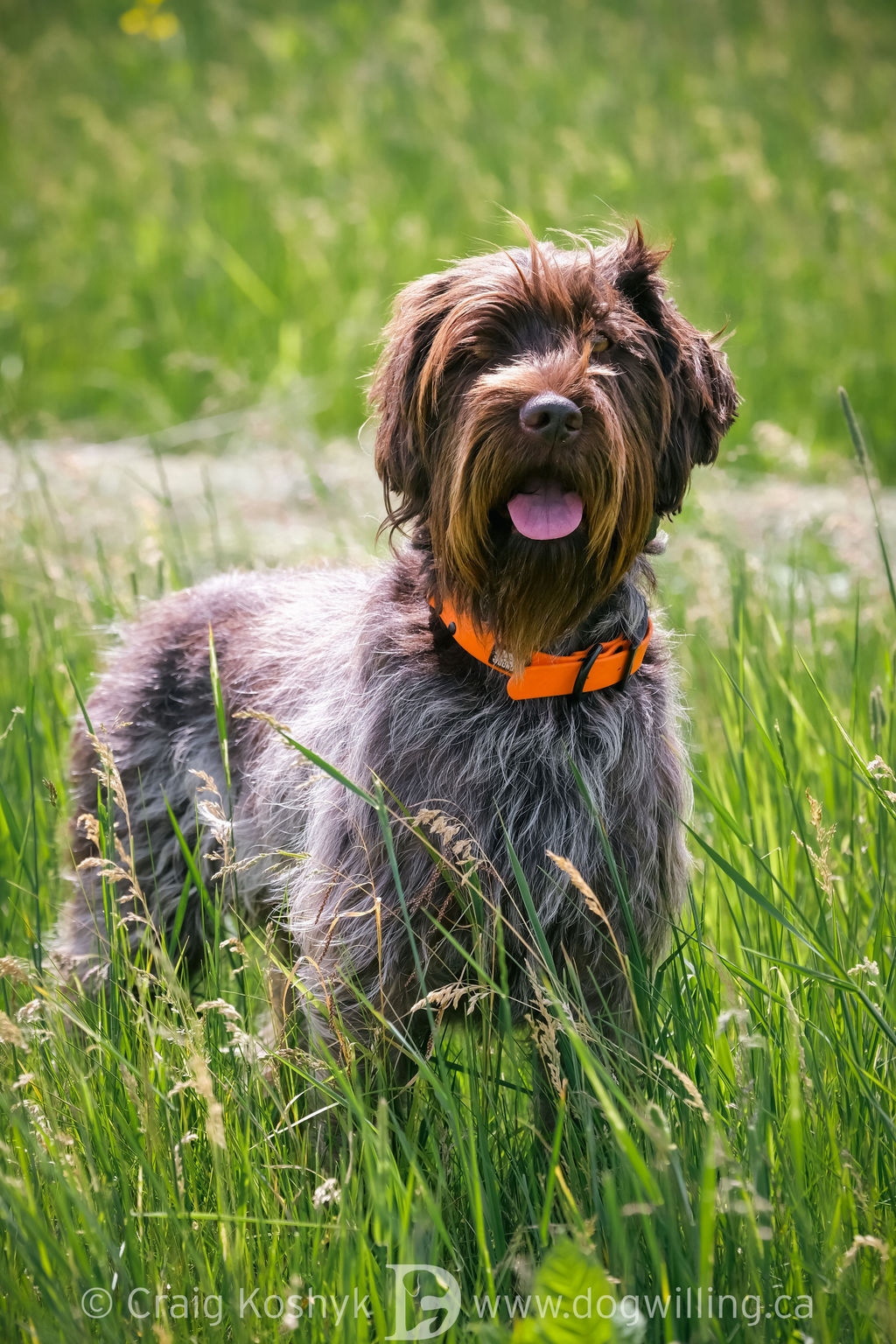
The WPG operates at a similar medium range and shares the Vizsla’s genuine versatility. The big functional difference is cold‑water capability. The Vizsla has no insulating undercoat — its short, smooth, dense coat is beautiful but offers limited protection in icy water. Early‑season waterfowl work is fine; late‑season cold‑water retrieving is genuinely hard on a Vizsla. The WPG’s harsh double coat handles cold water and wet conditions substantially better. According to the AKC, the Vizsla was bred for long days in Hungarian field and forest — not northern waterfowl blinds.
Both breeds blood‑trail, track wounded birds, and are capable multi‑season hunting partners. If your hunting is primarily upland in moderate climates, the Vizsla does everything you need. If you run a boat to a marsh blind in October in Montana, the WPG is the better fit.
Interactive Tool
Which test or trial should your dog do next?
Answer a few quick questions about your dog’s age, training and your goals. We’ll point you to the right next step — NAVHDA, an AKC hunt test or field trial, a UKC or NSTRA title, or the conformation ring.
The Velcro Factor
This is the defining Vizsla trait and the most important thing to understand about the breed. The Vizsla is, by reputation and reality, a “Velcro dog.” They want to be on you, with you, always. They follow you to the bathroom. They notice when your mood shifts. They are intensely emotionally attuned to their handler in a way that makes them extraordinarily responsive in the field — and occasionally exhausting at home if you work long hours or travel frequently.
The WPG is also affectionate and forms a close bond with its family, but the Velcro factor is moderate rather than extreme. A WPG is a warm, loving family dog; it doesn’t typically develop the separation anxiety that Vizslas are prone to. The Vizsla’s low separation tolerance is well-documented and a serious consideration for anyone who isn’t home most of the day.
Trainability and Temperament
Both breeds are soft in temperament and respond poorly to harsh handling. The Vizsla may be even more sensitive than the WPG — harsh corrections or heavy‑handed training can shut a Vizsla down quickly. Positive reinforcement, clear structure, and patience are the right tools for both dogs. An experienced gundog trainer who’s used to forcing pointing breeds will need to dial back for either of these two.
Energy levels are similar: both need 45–60 minutes of vigorous daily exercise at minimum. The Vizsla was bred for long field days and will hold up all day in October; so will the WPG. Neither is a couch potato, but neither has the frantic, bouncing‑off‑walls energy of a GSP or Weimaraner.
Coat, Grooming, and Health
The Vizsla’s coat is the lowest-maintenance of any sporting breed — weekly brushing, no stripping, minimal shedding (moderate seasonal shed). If you hate grooming, that’s a genuine plus. The WPG’s wire coat sheds less overall, but it requires hand‑stripping 1–2 times per year and the beard traps food and debris daily.
Health is where Vizsla buyers need to do careful research. The breed has a documented elevated rate of certain cancers — lymphoma, hemangiosarcoma, and mast cell tumors are all noted concerns. This is a serious issue that potential owners should discuss directly with breeders and research through the Project Upland pointing breed guide and Vizsla health registries. The upside: Vizslas are otherwise long‑lived — 12–15 years, one of the longer‑lived sporting breeds. Recommended health tests include OFA hips, elbows, ACVO eye exam, thyroid, and cardiac.
WPGs carry hip dysplasia, elbow dysplasia, hypothyroidism, PRA, and ear infection risks. The AWPGA requires OFA hips, elbows, thyroid, and annual eye exams for breeding dogs. Lifespan is 12–14 years — comparable to the Vizsla.
Home Life and Size
Both dogs are medium‑sized — Vizsla males run 22–24 inches and 55–65 lb; WPG males run 23–26 inches and 55–69 lb. Neither is apartment‑viable. Both are excellent with children and other dogs. The Vizsla is, famously, the only major pointing breed that also serves as a registered therapy dog in many programs — their emotional attunement and gentleness translate directly to that work.
Which Dog Fits You?
Choose the Vizsla if you want a stunning, affectionate, lower‑maintenance‑coat versatile dog and you can genuinely be present for it. The Vizsla thrives in households where someone is home most of the day. It’s an extraordinary dog for an upland hunter in a moderate climate who wants a dog that’s fully tuned to their emotional state.
Choose the WPG if cold‑water capability matters, you’re in a northern climate, or you want a bit more independence and separation tolerance built into the package. The WPG’s wire coat is a functional tool in harsh conditions — the Vizsla’s beautiful smooth coat is not.