Most hunters outside the versatile dog community have never heard of a Pudelpointer. The ones who have tend to be serious. Fewer than 400–600 Pudelpointer pups are whelped worldwide each year, virtually all of them from proven hunting parents — there is almost no such thing as a pet‑bred Pudelpointer. If you’re deep enough into the versatile breed research to be comparing one to a Wirehaired Pointing Griffon, you’re asking the right question. These two wire‑coated continental dogs occupy a very similar niche, and the differences between them are real but nuanced.
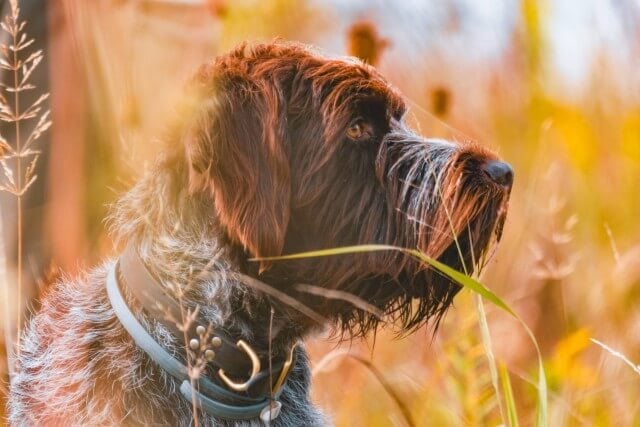
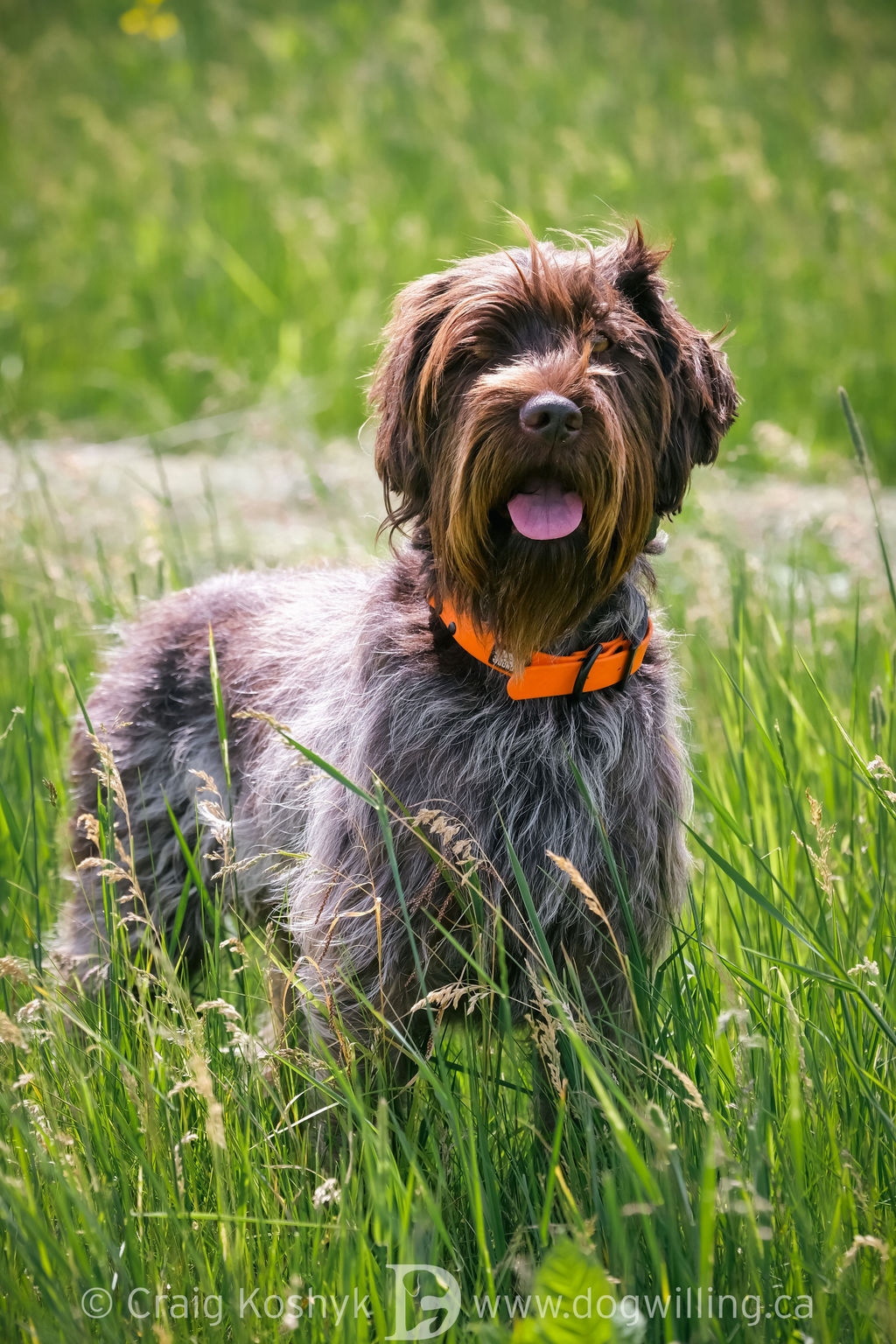
Two wire‑coated versatile breeds: the Pudelpointer and the WPG share more than a coat.
The Pudelpointer was developed in Germany in the late 1800s by crossing German hunting Pudels (Poodles) with Pointers — combining the Pudel’s love of water, retrieving instinct, and intelligence with the Pointer’s nose, range, and pointing drive. The WPG was developed in roughly the same era by Eduard Korthals, crossing multiple continental spaniels and pointers to build the ideal all‑terrain hunting companion. Both breeds were built for the same job; they just took different roads to get there.
Hunting Style: More Speed, Strong Retrieve
The Pudelpointer covers more ground than the WPG. According to Project Upland’s Pudelpointer profile, it ranks among the top pointing breeds in speed and range. North American breeders have selected for a faster, bigger‑running dog; European breeders tend to favor a closer‑working style. Either way, expect a Pudelpointer to cover more country than a WPG by default.
The pointing instinct is strong and develops early in most lines, and many Pudelpointers are natural backers — less common in WPGs. The retrieving instinct is excellent — the Pudel ancestry left a real mark here — and their love of water makes them outstanding duck dogs in harsh conditions. Both breeds blood‑trail, track, and handle multiple game types. If waterfowl is a significant part of your hunting season, the Pudelpointer’s retrieving enthusiasm and cold‑water tolerance are worth noting.
The WPG’s famous feline crouch — the “Korthals Cat” point, belly‑to‑ground with legs bent — is genuinely unique to the breed. The Pudelpointer’s point is more classic continental in style. Both dogs work all terrain: field, forest, brush, and wetlands.
Interactive Tool
Which test or trial should your dog do next?
Answer a few quick questions about your dog’s age, training and your goals. We’ll point you to the right next step — NAVHDA, an AKC hunt test or field trial, a UKC or NSTRA title, or the conformation ring.
The Off‑Switch: A Pudelpointer Advantage
This is one of the most distinctive Pudelpointer traits and worth its own section. According to Rock Creek Pudelpointers’ FAQ, Pudelpointers have an “uncanny ability to turn off the switch when not hunting.” A Pudelpointer that just ran a three‑hour morning in the field will come inside and settle. They get out of shape rather than becoming destructive when under‑exercised — a genuinely more forgiving trait than most high‑drive pointing breeds.
The WPG is also calm and manageable at home by versatile breed standards, but the Pudelpointer’s off‑switch reputation is specific and well‑documented among breeders. Both dogs need 45–60 minutes of vigorous daily exercise; neither has the neurotic edge of a Weimaraner or GSP left without outlets.
Temperament and Trainability
The Pudelpointer is notably unbothered. Level‑headed, friendly with strangers and other dogs, “not a one‑man dog” — they bond easily even when acquired as adults. The Pudel ancestry shows up in a slightly clownish sense of humor, quick bonding, and intuitive intelligence. Breeders describe their dogs as capable of handling some training pressure without shutting down, with an occasional stubborn streak that doesn’t tip into sensitivity.
The WPG is softer. It responds best to patient, positive methods; force creates roadblocks in a way that a Pudelpointer handles more easily. If you’re a first‑time versatile dog owner who tends toward a gentler training style, the WPG’s temperament is arguably a better match. Experienced trainers will find the Pudelpointer’s slightly harder edge manageable and even helpful.
Both breeds are genuinely amateur‑friendly. Rock Creek Pudelpointers notes that children ages 12–15 have successfully trained and tested their own pups — that’s meaningful evidence of genuine accessibility. The WPG is the second most registered breed in NAVHDA; Pudelpointers are also tested widely through NAVHDA.
Coat, Grooming, and Health
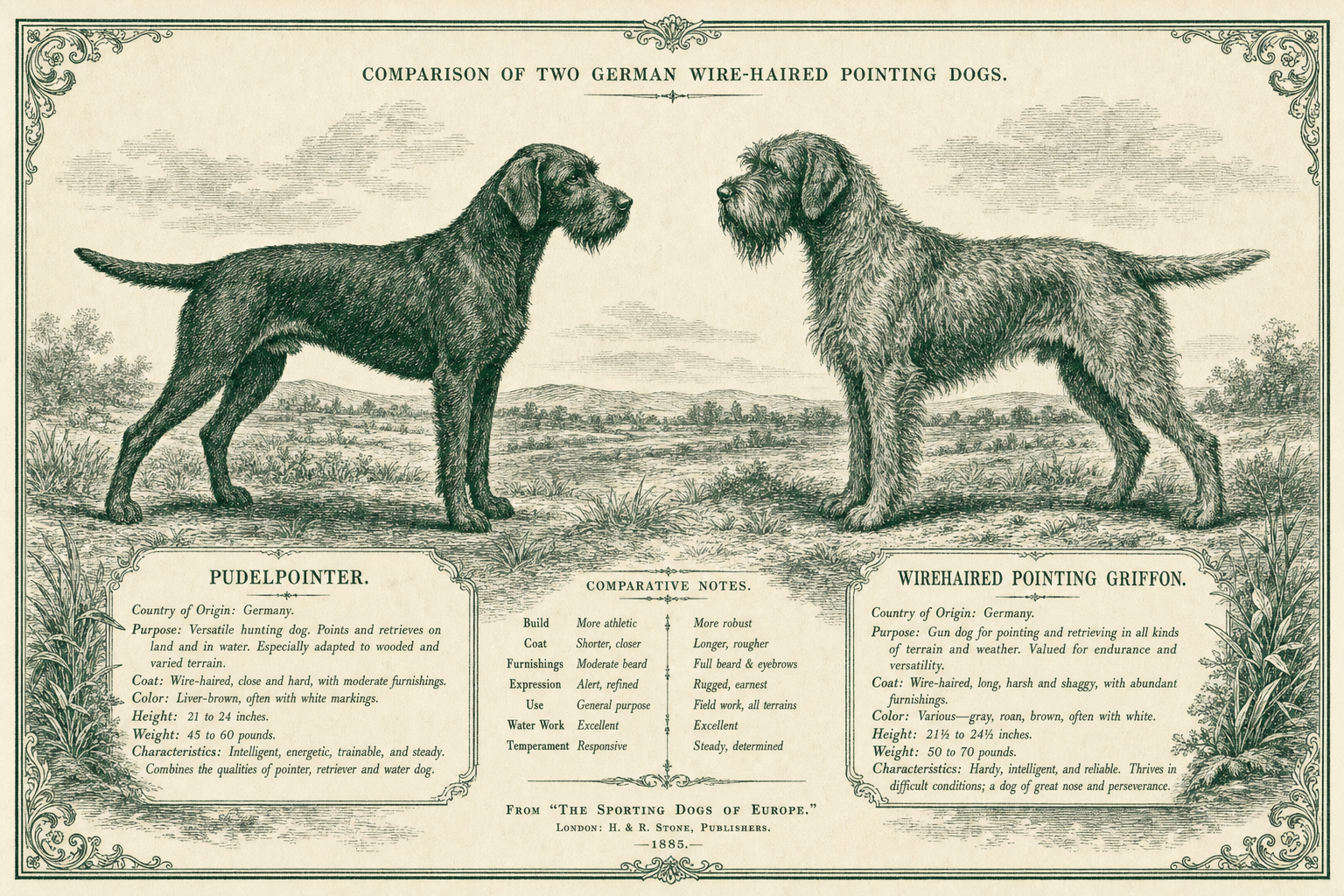
Both breeds have a coarse, hard, flat‑lying wiry topcoat with beard and eyebrows. Both shed minimally. Both need light hand‑stripping in spring to pull dead coat and maintain texture — clipping softens both coats permanently. The Pudelpointer’s coat varies from smooth to woolly depending on the individual, which is a known breed challenge that has improved over time. WPG coat variability is also real — not all WPGs have the ideal harsh double coat.
The Pudelpointer health picture is remarkably clean. Approximately 400 pups are whelped annually with 99% from tested hunting parents, resulting in one of the most genetically consistent breed populations in the gundog world. Hip dysplasia and epilepsy are the primary documented concerns; OFA hips and epilepsy monitoring are the recommended tests. The WPG requires OFA hips, elbows, thyroid, and annual ACVO eye exams per AWPGA standards.
Pudelpointer males run 24–27 inches and 55–67 lb; WPG males run 23–26 inches and 55–69 lb. Sizes are nearly identical. Pudelpointer lifespan averages around 12 years; the WPG runs 12–14 years.
The Rarity Question
The Pudelpointer’s biggest practical obstacle is availability. Long waitlists, limited breeders, and a small registered population mean you may wait a year or more for a pup. The WPG has a larger and growing North American breeder community — registrations grew 63% in a decade according to NAVHDA data. If you want a proven hunting pup without a multi‑year wait, the WPG is more accessible. If you’re willing to wait and want the genetic consistency that comes from near‑universal hunting parentage, the Pudelpointer’s small community delivers something remarkable.
Which Dog Fits You?
Choose the Pudelpointer if you want a slightly harder, wider‑running wire‑coated versatile dog with exceptional off‑switch behavior, outstanding waterfowl capability, and extraordinary genetic consistency — and you’re willing to wait for one. It’s a breed with a small but devoted following for good reason.
Choose the WPG if you want the same core versatile wire‑coated package with a softer temperament, the unique Korthals Cat point style, a larger breeder community, and somewhat better availability. Both are excellent. The question is which nuances match your priorities.