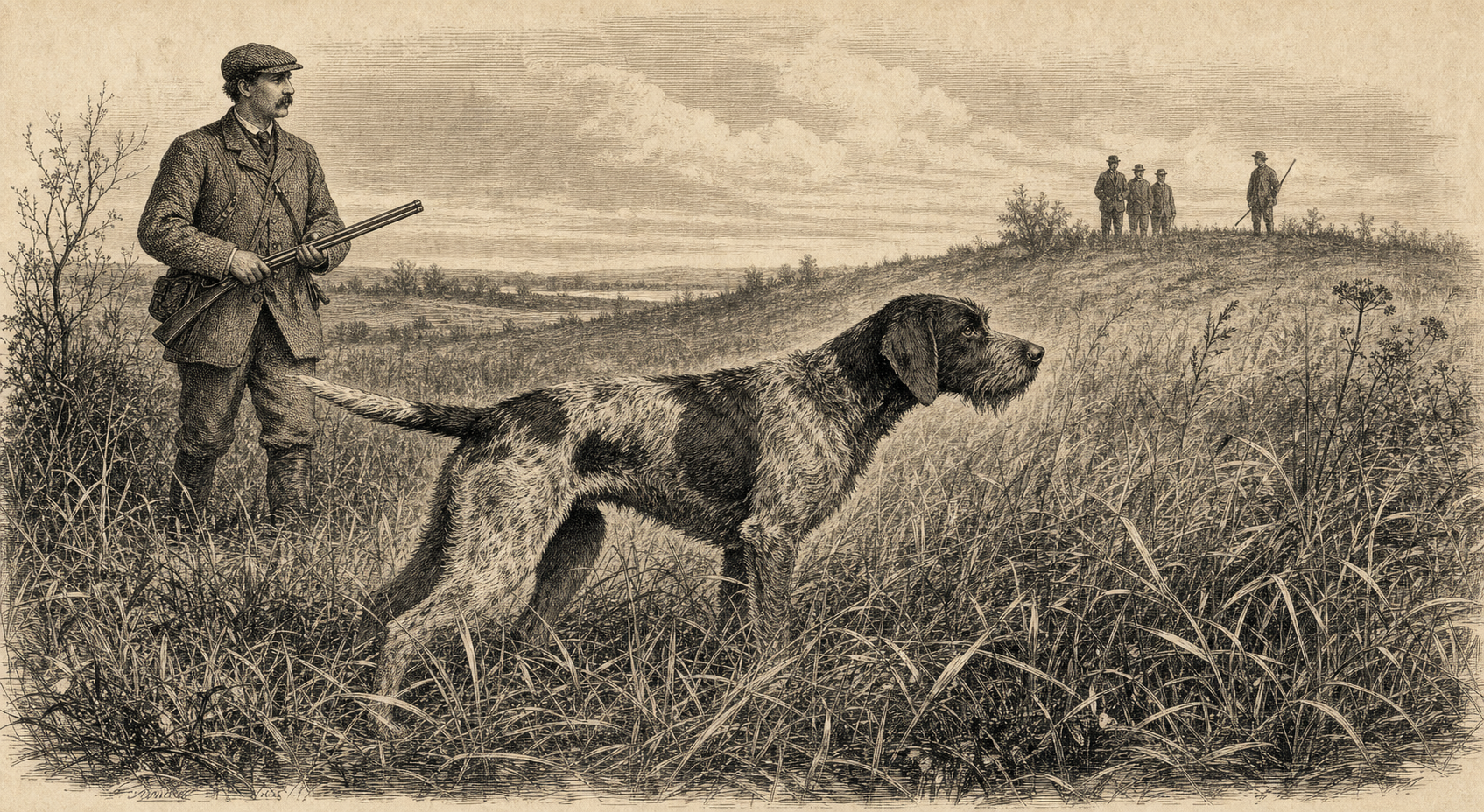
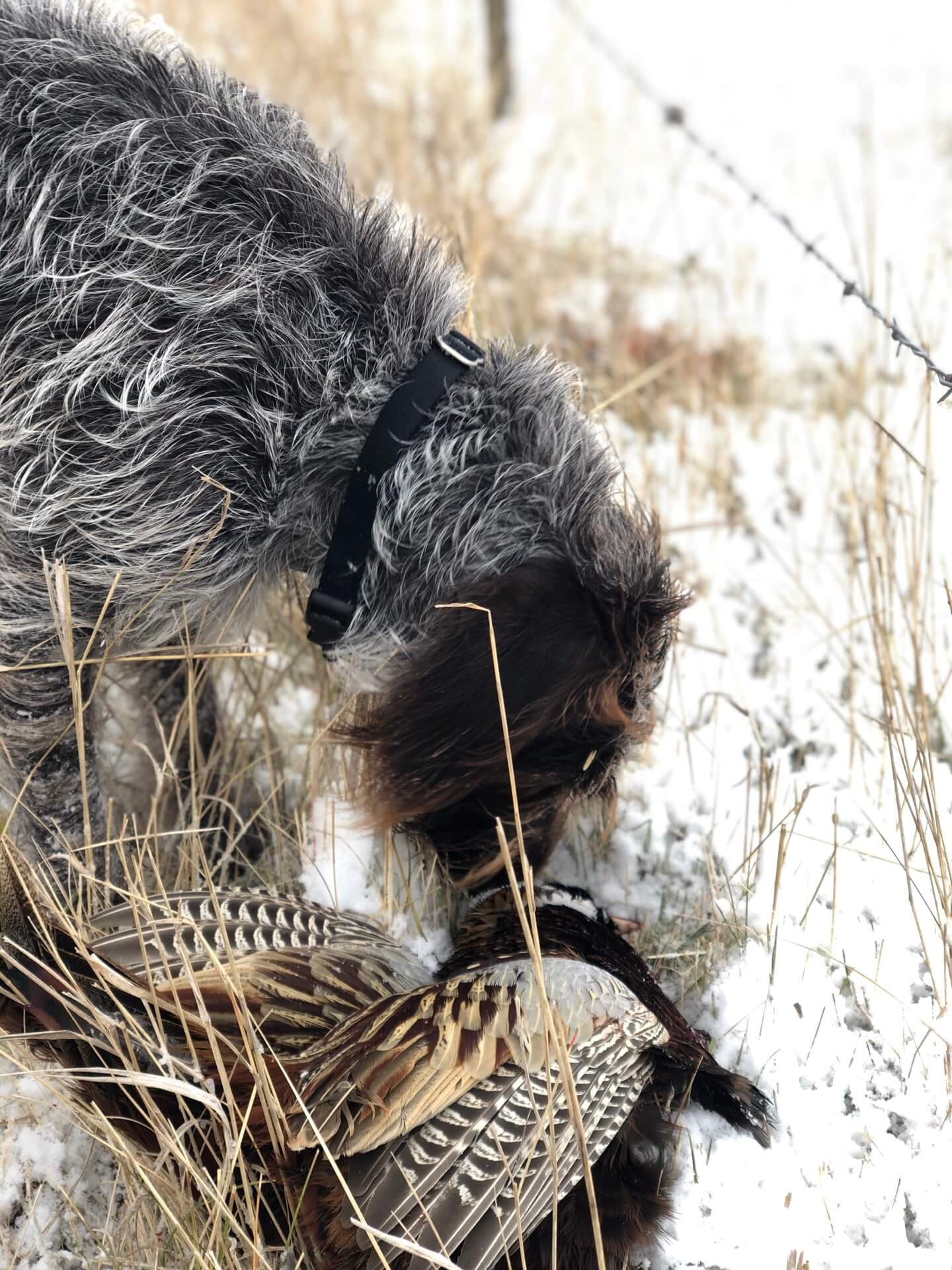
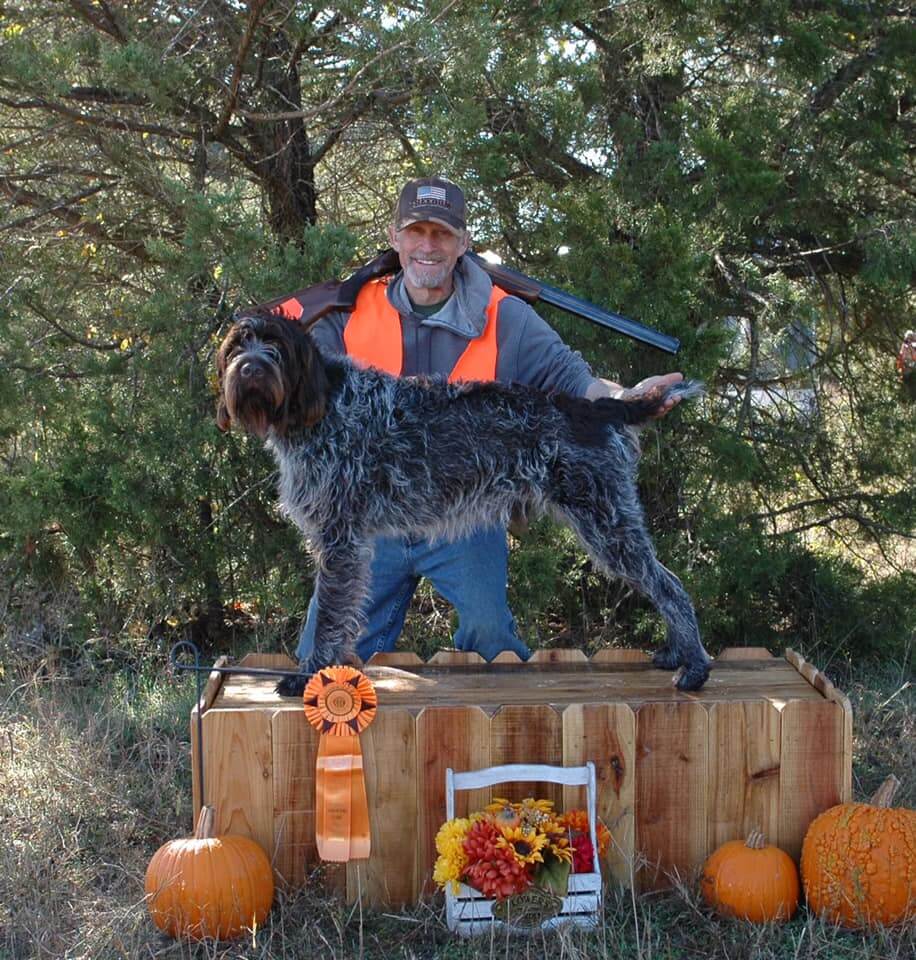
Stand at the edge of a frosted field some October morning and watch a good dog work, and you will understand why men have argued about bird dogs for a hundred and fifty years. The dog locks onto a scent, tail high, one foot lifted, the whole animal turned to stone over a tucked-in rooster. It is a beautiful thing. But the moment you decide you want that beauty measured — titled, recorded, proven to a stranger — you run headlong into the single most confusing fork in the bird-dog world: the difference between a hunt test and a field trial.
They sound like the same thing. They are not. Confusing them is the most common mistake a new versatile-breed owner makes, and it can send you and your young Wirehaired Pointing Griffon down a road that suits neither of you. So before we walk through any single program — NAVHDA, AKC, UKC, NSTRA — let us settle the one distinction that everything else hangs on.

A Hunt Test Measures Your Dog Against a Standard
A hunt test asks one question: Does this dog meet the written standard? Nothing more. Your Griffon is not running against the dog in the next brace, or the field-trial champion three counties over. He is running against a fixed yardstick laid down in a rulebook. If he clears the bar, he passes — he earns what handlers call a “leg,” a qualifying score toward a title. If he falls short, he doesn’t.
The grand thing about this arrangement is that every dog entered can pass on the same day. If a dozen dogs all do honest work, a dozen dogs all go home with a qualifying score. There is no ceiling, no quota, no one dog’s success purchased at another’s expense. The atmosphere reflects it: hunt tests tend to be encouraging, instructive places, full of people who will talk your ear off about whoa-breaking and water entries between braces. It is, for most foot hunters and most Griffons, exactly the right place to begin.
The big hunt-test systems — NAVHDA’s Natural Ability, Gun Dog, and Utility tests, the AKC’s Junior, Senior, and Master Hunter, the UKC’s TAN and Water Retrieve tests — all share this pass-or-fail-against-a-standard logic.
A Field Trial Is a Competition, and Only the Best Few Win
A field trial flips the whole thing on its head. Here your dog is ranked head-to-head against every other dog in the stake, and only the top handful — typically first through third or fourth — take home anything at all. Run a flawless heat and finish fourth in a field of thirty, and you earn exactly nothing that day. The win goes to the best dog on that ground, in that hour, relative to the others.
That competitive crucible rewards a particular kind of dog: big-running, fast, polished to a hard shine, often handled by professionals and, in the top all-age stakes, followed on horseback across country a foot hunter would never cover. Titles like the AKC Field Champion or the NSTRA Champion are built by accumulating placement points — not qualifying scores, but the spoils of beating other good dogs, again and again.
A test asks whether your dog is good enough. A trial asks whether your dog is better than the rest. Those are very different questions to ask of a hunting partner.
The Difference at a Glance
| Hunt Test | Field Trial | |
|---|---|---|
| Judged against | A written standard | The other dogs entered |
| Result | Pass / fail (a qualifying “leg”) | Placement (1st–4th) & points |
| Can everyone succeed? | Yes — all dogs can pass | No — only the top few place |
| Typical style rewarded | Honest, controlled foot-hunting work | Range, speed, finished polish |
| Atmosphere | Instructive, welcoming to newcomers | Competitive; often pro-handled |
| Examples | NAVHDA NA/GDT/UT · AKC JH/SH/MH · UKC TAN/WRT | AKC field trials · NSTRA · UKC Open Class |
The trainers at Standing Stone Kennels lay out the same divide plainly in the conversation below — worth a listen if you want to hear working dog folks talk it through before you ever fill out an entry form.
Which One Fits a Wirehaired Pointing Griffon?
For nearly every Griffon and nearly every owner, the honest answer is: start with hunt tests. The Wirehaired Pointing Griffon was bred to be a close-working, biddable, do-everything foot-hunter — a dog that points, tracks, and retrieves on land and in cold water, all within gun range of a walking hunter. That is precisely the dog a hunt test is designed to reward, and it is why NAVHDA — founded for exactly these Continental versatile breeds — is the most natural home for a Griff.
Field trials are not off-limits to the breed; a talented, well-handled Griffon can earn placements, particularly in the more walking-friendly NSTRA and gun-dog stakes. But the wide-ranging, horseback all-age game is built around a very different animal than the dog you want padding along at heel on a Montana coulee. Know what you’re asking for before you ask it.
Where to Begin: An Honest Roadmap
If you are holding a Griffon puppy and wondering where the first rung is, here is the short version — the easiest entry points, in plain order:
- Easiest first steps (6–16 months): NAVHDA Natural Ability, UKC TAN and Water Retrieve, and AKC Junior Hunter. These reward raw, inherited ability and ask almost nothing in the way of finished training.
- The trained middle: NAVHDA Gun Dog Test and AKC Senior Hunter — steadiness, reliable retrieves, real polish.
- The finished dog: NAVHDA Utility Test and AKC Master Hunter, the benchmarks of a complete versatile gun dog.
- The pinnacle (rare air): the NAVHDA Versatile Champion — held by only a fraction of dogs ever tested.
Each of those programs gets its own honest, detailed walk-through in this series — what every test demands, what earns a pass, and what will get you sent home before lunch. This first piece is just the map of the country. The rest of the library is the trail.
If you want to know whether your dog is a good hunting dog, enter a hunt test. If you want to find out whose dog is best, enter a field trial. Both are honorable games — just be sure you know which one you’ve signed up for.