More hunters in North America have started with a Lab, a Golden, or a Chesapeake Bay Retriever than with any other dog. These three breeds are the entry point — the ones your neighbor has, the ones your dad hunted behind, the ones that sit next to you in the duck blind and greet your kids at the door. They’re popular for good reason. They’re also fundamentally different from a Wirehaired Pointing Griffon in how they hunt, and understanding that difference matters before you choose.
The most important thing to know: a retriever is not a pointer. Labs, Goldens, and Chessies do not point birds. They flush them and retrieve them — a completely different hunting partnership. If you want a dog that holds birds on point and lets you walk in for the shot, a retriever is not the right tool. If you primarily want a waterfowl dog that can also bust pheasants out of cover, these three breeds are the gold standard. That’s not a hierarchy — it’s a difference in mission. This post will help you figure out which mission is yours.
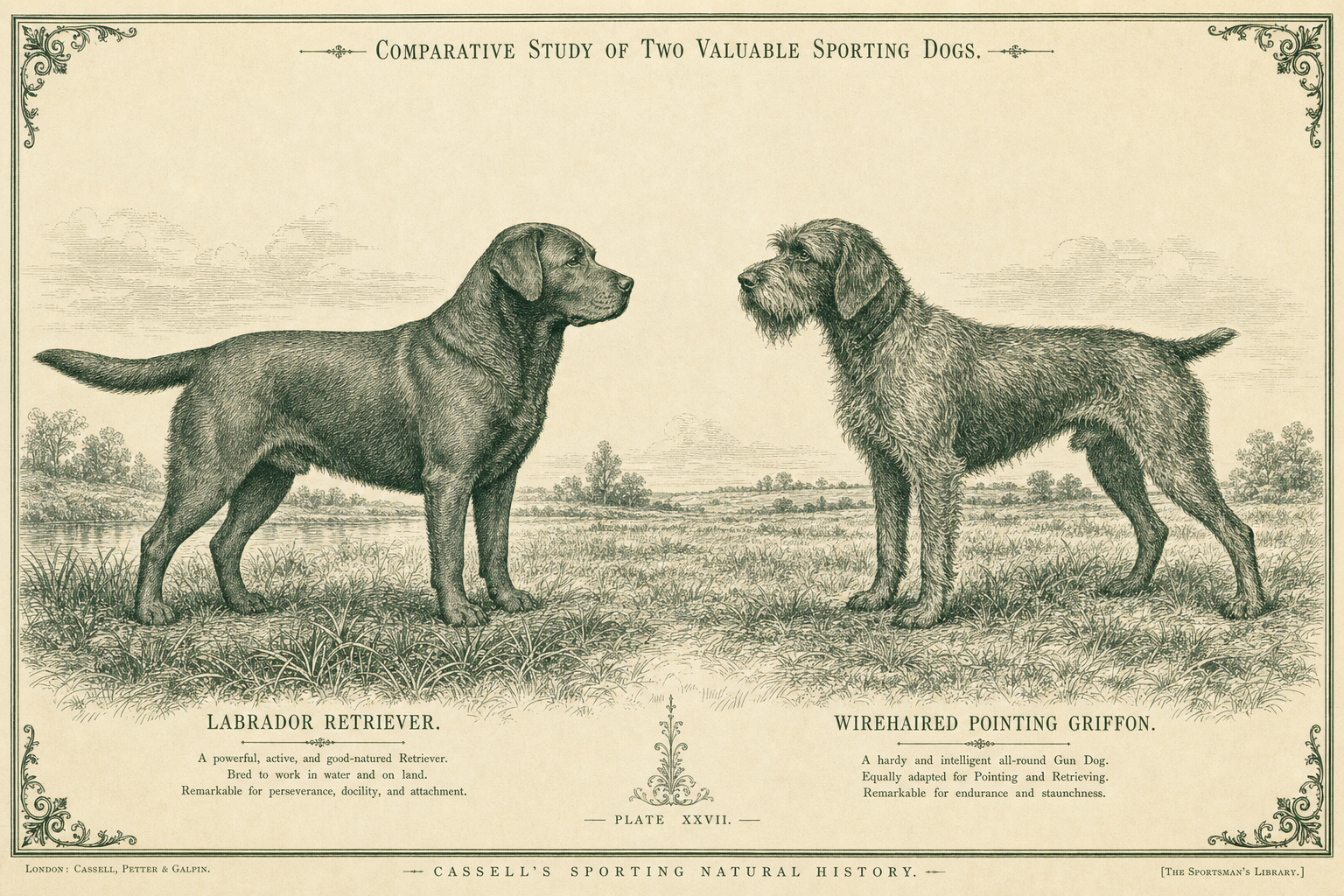
Wirehaired Pointing Griffon vs. the Retrievers — pointing versatility vs. the original waterfowl specialists.
How Retrievers Hunt: A Different Contract
Retrievers hunt by quartering or working through cover and flushing birds into the air — no point, no hold, just movement and action. The hunter must be ready when the bird goes up, because there’s no pause. After the shot, the retriever marks the fall and brings the bird to hand. In waterfowl work, they sit in the blind, mark multiple falling ducks, and make retrieves in sequence. Cold water, decoys, ice — the retriever’s natural environment.
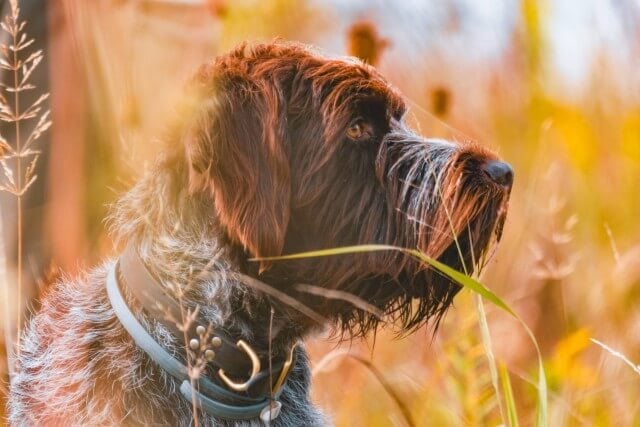
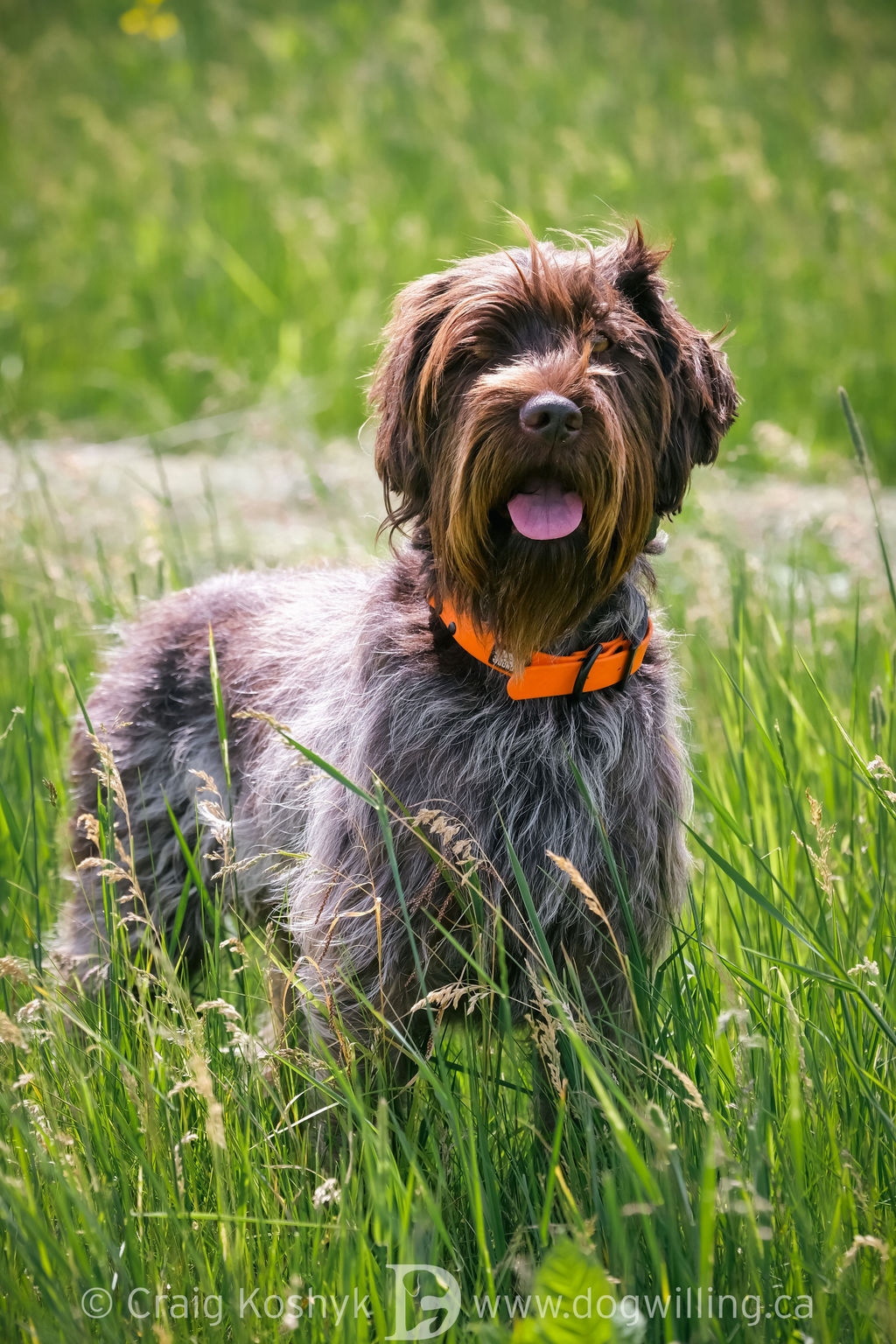
The WPG finds birds at medium range, crouches into its feline pointing posture, and holds until the hunter walks in for a controlled shot. It then retrieves from land or water. Both systems work; they work differently. For hunters who want to do both — point upland birds and retrieve ducks — a versatile continental breed like the WPG (or a German Wirehaired Pointer or Pudelpointer) is the answer a retriever cannot fully provide. See our full gundog comparison series for the broader picture.
Labrador Retriever
The Lab is the most popular sporting dog in North America — and it earns that title every season. According to the Project Upland Lab profile, Labs are “bright, sociable, companionable, biddable, outgoing, and even-tempered.” They adapt to almost any hunter and almost any environment. American-bred (field) Labs are lean, athletic, built for big water and long marking sequences; British (bench) Labs are stockier, more controlled, and suited to walked-up upland hunting. They’re practically different dogs.
For waterfowl, the Lab’s dense, water-resistant double coat, exceptional marking ability, and cold‑water endurance make it the benchmark retriever. For upland, they’re capable flushers on pheasant and grouse. Trainability is outstanding — one of the most trainer‑friendly breeds in the world, which is a genuine advantage for a first‑time hunting dog owner.
The Lab’s honest tradeoffs: shedding is substantial — spring and fall blow‑outs are significant, noticeably more than the WPG. A documented POMC gene mutation makes many Labs food‑obsessed and prone to obesity, which requires active management. Health testing includes OFA hips, OFA elbows, ACVO eyes, and EIC (exercise‑induced collapse) DNA test. Males run 21.5–24.5 inches and 65–80 lb (American type); lifespan 11–13 years.
Interactive Tool
Which test or trial should your dog do next?
Answer a few quick questions about your dog’s age, training and your goals. We’ll point you to the right next step — NAVHDA, an AKC hunt test or field trial, a UKC or NSTRA title, or the conformation ring.
Golden Retriever
The Golden is the softest, most family‑friendly hunting dog on this list — and in the right field lines, a genuinely capable bird dog. Originally developed in the Scottish Highlands specifically for hunting, field Goldens retain real working purpose while show Goldens have diverged significantly. “Perhaps the best upland retriever,” per some trainers cited by Ducks Unlimited. The soft mouth is legendary — a Golden can carry an egg without cracking it. Exceptional marking ability. Strong cold‑water performance, though not quite the Chessie’s level.
Temperament is the Golden’s signature: exceptionally social, gentle with children, positive‑reinforcement oriented, and patient in a way that makes training a genuine joy. Sensitivity is real — harsh corrections shut them down. For a family that hunts occasionally and lives with the dog daily, the Golden may be the most naturally integrated hunting companion on this list.
The Golden’s most serious concern is cancer: approximately 60% of Goldens die of cancer — hemangiosarcoma, lymphoma, osteosarcoma, mast cell tumors — a rate far higher than most breeds. This is documented, not exaggerated, and worth an in‑depth conversation with any breeder. Health tests include OFA hips, elbows, cardiac, and ACVO eyes. Shedding is heavy — often heavier than a Lab. Males run 23–24 inches and 65–75 lb; lifespan 10–12 years.
Chesapeake Bay Retriever
The Chessie is the toughest retriever alive. Built by Chesapeake Bay watermen for brutal cold‑water duck hunting — rough waves, ice, hundreds of retrieves per outing — it is, as the VCA Chesapeake Bay Retriever profile describes it, “arguably the toughest waterfowl retriever in the world.” Its dense, oily, wavy double coat traps warmth in icy water in a way no other retriever coat does. The Chessie will use its powerful chest to break ice and dive into frozen water without hesitation.
The temperament is harder than the Lab or Golden. More independent, more reserved with strangers, more protective of its family. The Chessie is loyal and affectionate with its people but is not the social butterfly the Lab is. Training requires consistency and precision — the Chessie is “quick to learn, but can be stubborn” (VCA). E‑collar timing matters. This is not a first‑time dog owner’s breed, and it’s not a good choice for hunters who want something as easy as a Golden.
The Chessie’s iconic “grin” (baring its front teeth as a sign of joy, not aggression) and “humming/cooing” vocalizations are completely distinctive behaviors that owners love. Health tests include OFA hips, elbows, ACVO eyes, vWD DNA, and EIC DNA. Males run 23–26 inches and 65–80 lb; lifespan 10–13 years.
The WPG vs. the Retrievers: What Actually Differs
The core difference is the point. A WPG finds birds and holds them — giving you a moment to walk in, set your feet, and make a clean shot. Retrievers flush birds and chase them up. Both systems are effective; they feel different and suit different terrain and hunting styles.
For upland hunting, the WPG’s controlled point is a significant advantage in mixed cover, where a flushing dog can push birds out of range before you’re ready. For waterfowl, all three retrievers outperform the WPG in cold‑water endurance and volume — the Chessie especially. The WPG handles duck blind work with a calm temperament and retrieves from water, but it was not built to be a cold‑water retrieval machine.
The WPG also blood‑trails wounded game — a NAVHDA‑tested capability that none of the three retrievers were developed for. See the WPG health testing guide for more on NAVHDA’s testing system and what it produces in a finished dog.
Shedding: the Lab and Golden shed significantly more than the WPG. The Chessie sheds moderately. The WPG’s wire coat is one of the lower‑shedding options among sporting breeds.
Which Dog Fits You?
Choose a Lab if you want the most adaptable, trainer‑friendly hunting dog available — equally at home in a duck blind, a pheasant field, or a first‑time hunter’s living room. The Lab is the all‑rounder retriever, and it earns that reputation.
Choose a Golden if you want a soft‑mouthed, family‑first hunting companion with outstanding retrieving instincts and a temperament that makes training a joy. Go in with eyes open about the cancer risk and seek field‑bred lines specifically.
Choose a Chessie if you’re a serious cold‑water waterfowler who wants the toughest retrieval dog alive and you have the experience to handle a harder, more independent dog. This is a specialist’s breed and it delivers.
Choose the WPG if you hunt upland birds and want a pointing dog — or if you want one dog that points pheasants in the morning and retrieves ducks in the afternoon, works water, and tracks wounded game. The WPG is the versatile hunter’s answer when a retriever alone isn’t enough.
How this article was made: researched and written with AI, then reviewed, edited, and published by Griffons Out West in Belgrade, Montana.
Breed details here are drawn from Project Upland, Ducks Unlimited, and VCA Hospitals; every dog varies by line and breeder, so meet the dogs in person before you decide.